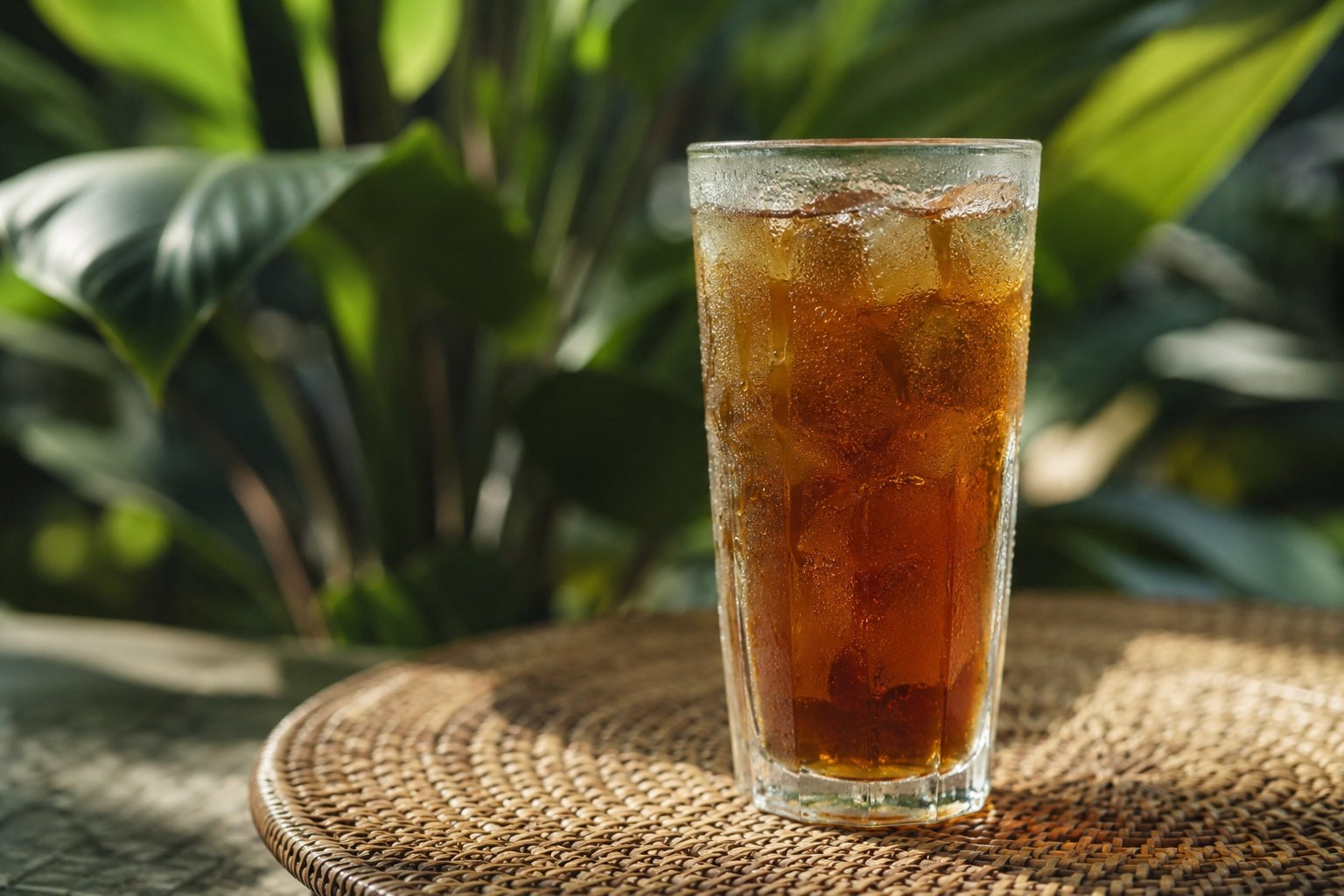
"Doctor, I have a cup of liang teh at the kopitiam after lunch almost every day — will drinking it long-term be a problem?"
This question is indeed common in Malaysia. From pot-brewed liang teh at kopitiams and canned versions at convenience stores to dedicated herbal tea stalls on street corners, liang teh has become part of daily eating culture in Malaysia. But since it is water boiled with herbs, does drinking it every day count as "tonification" — or could it become a burden? This article explores five ideas to help clarify where liang teh sits within TCM theory, how it differs from ordinary tea, and where the line should be drawn in daily life.
I. The Most Basic Layer — What Liang Teh Actually Is
In the TCM theoretical framework, liang teh is understood as an everyday drink made by boiling herbs, designed around the idea of "using the nature of herbs to adjust imbalances in the body's state." Common ingredients such as chrysanthemum, honeysuckle, self-heal spike, monk fruit and licorice root each have different natures and directional actions in TCM theory — some lean toward clearing heat, some toward moistening — and together they become a pot of liang teh.
A key point: liang teh is not a single formula. Different stalls and different households brew it with very different ingredient ratios. Some are sweeter, some more bitter, some contain many herbs, some are just one ingredient steeped in water. The term "liang teh" covers a wide range, so it cannot be judged as simply "good" or "bad."
From a TCM theory perspective, every medicinal herb is understood to have a directional nature ("pian-xing"). Drinking a beverage that contains herbs means the body is receiving these directional qualities. What effect this has depends on the drinker's condition and the combination of herbs — not on the label "liang teh."
💡 Remember: liang teh is water boiled with medicinal herbs, not "just tea." Ingredients vary by recipe, so it cannot be treated as a single thing.
II. What Is Often Confused With It — Liang Teh vs. Ordinary Tea vs. Herbal Soups
Many people group liang teh with everyday teas — black tea, green tea, pu-erh — thinking all of them are just "flavoured water." But within TCM theory, their positions differ. Ordinary tea is a daily beverage with a relatively mild nature; liang teh carries a clear herbal character, and its directional action is considered more targeted.
Another common confusion is between liang teh and herbal soups (such as slow-brewed herbal soups). Herbal soups are usually food-first with herbs as supplements, emphasising how herbs pair with ingredients. Liang teh is the opposite: herbs are the main event, and the result is a cup of dark liquid. The "concentration" and "strength of action" are understood differently in TCM theory.
More recently, canned liang teh from convenience stores may have been reformulated with added sugar and other ingredients. It is closer to "a drink that contains herbal extracts" than to traditional liang teh. Treating it as a sugar-sweetened beverage may be more realistic than treating it as herbal water.
💡 Remember: liang teh, ordinary tea and herbal soups are three different things. They cannot be lumped together as "things you drink or eat anyway."
III. A Table to Make It Clear — Brewed Liang Teh vs. Homemade vs. Canned
| Comparison | Stall-brewed (traditional) | Brewed at home | Kopitiam / convenience store canned |
|---|---|---|---|
| Main ingredients | Herbs; formula decided by the stall | Herbs and ratios fully controlled by you | Reformulated; may contain sugar and additives |
| Concentration and direction | Higher herb concentration; clear direction | Adjustable to individual needs | Lower concentration; leans toward beverage |
| Variables | Set by each stall's own recipe | Fully controlled by you | Standardised; consistent every can |
This table deliberately avoids "how often to drink" or "how much to drink." These vary by individual and should be explained by the practitioner assessing you. What the table shows is that even under the same name "liang teh," sources differ greatly in herb concentration and ingredient consistency. They cannot be treated as the same thing.
💡 Remember: different sources mean different ingredients and concentrations. "Liang teh" is a broad category, not a single product.
IV. When Extra Caution Is Needed
- People taking western medication: Herbal ingredients in liang teh may interact with drugs. If you are on prescription medication, ask your doctor or pharmacist before drinking it — do not stop or adjust your medication on your own.
- People with chronic conditions: Diabetes, hypertension, kidney disease — these conditions place the body in a different state. The sugar or specific herb ingredients in liang teh may have unintended effects. Discuss with your doctor first.
- Pregnant and breastfeeding women: Common precautions listed in TCM literature include caution for pregnant and breastfeeding women when consuming herbal drinks, as certain herbs' directional actions need special consideration during this period. If you are expecting or breastfeeding, ask your obstetrician and a registered TCM practitioner before drinking.
- Young children and older adults: Children and older adults have different physical states from younger adults, and may respond to herbs differently. Before giving liang teh to either group, ask a doctor or a registered TCM practitioner first.
- The daily habit itself: When an herbal drink becomes a "must-have every day" habit, it is worth pausing to ask: does my body actually need this, or have I just gotten used to the taste?
⚠️ Safety reminder: TCM and Western medicine complement each other; it is not a choice between them. If you feel unwell after drinking — such as diarrhoea, dizziness, or a skin rash — stop drinking and contact your doctor. For difficulty breathing, swelling of the face or throat, confusion or persistent vomiting, call 999 immediately or go to the nearest emergency department.
A note: this section is general information only. For conditions like these, follow your doctor's diagnosis and treatment, and seek medical attention when you need it.
V. How to Approach It in Malaysian Daily Life
In Malaysia, liang teh appears almost everywhere. At lunch, when someone at the kopitiam orders teh tarik, another might switch to "liang teh." On a hot afternoon, a cup of freshly brewed liang teh from a roadside stall is a common sight. At convenience stores, rows of canned liang teh sit in the fridge, waiting to be picked up.
None of these scenes is right or wrong by itself. The real question is: why are you drinking it?
If it is because the weather is hot and you want something cooling, liang teh is just one option among many — plain water and lemon water will quench thirst just as well. If you are drinking it because "liang teh is good for health," then pause: what is that "good" based on? Who said it, and on what evidence?
Another familiar scene is around Chinese New Year or Hari Raya, when meals become richer and gatherings increase. Many people habitually "drink liang teh to cut through the grease." Behind this is the simple idea of using liang teh to "balance" the diet. In TCM theory, this can be understood as an attempt to adjust directional imbalances — but it does not mean "once I drink liang teh, I can eat whatever I want."
There is also a practical consideration: liang teh bought ready-made may already be sweetened. If you plan on a cup a day, checking the sugar content first may be the more realistic starting point.
In closing
✅ Keep these in mind:
- Liang teh is water boiled with herbs; ingredients vary by recipe — it is not a single "health drink."
- If you take medication, have a chronic condition, are pregnant or breastfeeding, or are caring for young children or the elderly, ask your doctor or pharmacist first.
- Canned liang teh leans toward being a sugar-sweetened beverage, with lower herb concentration than freshly brewed versions.
- The TCM concept of "herbal directional nature" means any herbal drink should not be consumed blindly every day.
- Before drinking liang teh, ask yourself: do I need it, or have I just gotten used to the taste?
❌ What not to do:
- Do not drink it daily just because "it is said to be good," without considering whether you actually need it.
- Do not treat liang teh as a "cure-all" that cancels out irregular routines or rich eating.
- Do not drink liang teh while on prescription medication without asking first — the interaction between drugs and herbs requires professional assessment, and never stop prescribed medication on your own.
👉 If you are unsure — "in my situation, is it suitable for me to drink liang teh regularly?" — feel free to reach out to HansMed for an online consultation, where practitioners registered under the T&CM Act 2016 can assess your individual case.
Sit with a licensed TCM practitioner from wherever you are.
HansMed Modern TCM
For general wellness education only — not medical advice. Consult a registered TCM practitioner for personal guidance.


