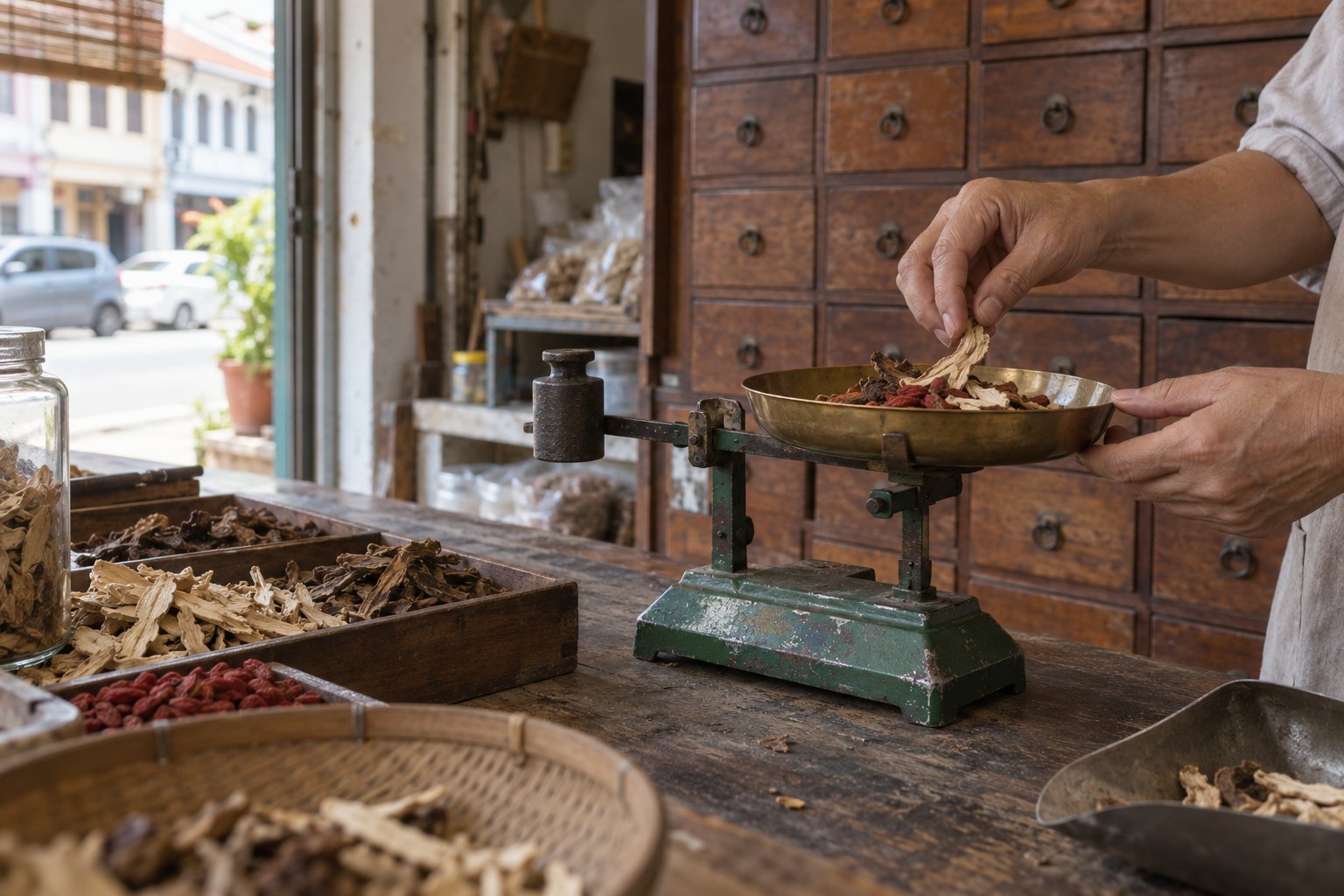
"My friend said taking Chinese herbs for too long damages the kidneys. Is that true? And I still have a packet of herbal-tea ingredients I bought from a medical hall last week. Can I still drink it?" A question that comes up often is this pair: one is something heard, the other is something in hand.
The answer first. The class with a documented kidney record is a specific one: Aristolochia plants, which contain aristolochic acid. Malaysia's National Pharmaceutical Regulatory Agency (NPRA) lists all Aristolochia species among botanicals "banned due to reported adverse event", with the stated reason "Contain Aristolochic Acid reported to cause kidney toxicity". [NPRA-A7]
As for that packet of tea ingredients, check three things: you can say where it came from, there is no mould, insect damage or off-smell, and it has been stored properly throughout. If any one of the three fails, our practice is not to drink it.
The six things below cover which class has the record, how it does its harm, how to check registration, how to store herbs, and who needs extra care.
A note: this section is general information only. For conditions like these, follow your doctor's diagnosis and treatment, and seek medical attention when you need it.
I. "Do Chinese herbs harm the kidneys?" — which class has the record, and how Malaysia regulates it
The phrase "Chinese herbs harm the kidneys" has a real origin, but a specific target.
- The class with the record: herbs containing aristolochic acid. Hong Kong's Department of Health, through its Chinese Medicine Regulatory Office, lists it in its reference material on Chinese herbs associated with adverse events in Hong Kong; the source is plants of the genera Aristolochia and Asarum in the Aristolochiaceae family. [HK-CMRO] From 1 June 2004 Hong Kong stopped the import and sale of Aristolochia herbs and their preparations, including the formerly common 关木通, 广防己, 马兜铃, 青木香 and 天仙藤. [HK-CMRO] What harm it does, and how the recorded cases happened, is in section II.
- Malaysia's rule. NPRA's Guideline on Registration of Natural Products lists all Aristolochia species among "Botanicals (and botanical ingredients) banned due to reported adverse event", and states that these prohibited ingredients are not allowed in the formulation of natural products registered by the Authority. [NPRA-A7] Why that rule is a real checkpoint is also in section II.
- This does not mean every other herb can be taken freely. Anything with an effect has doses and people it does not suit. Which herb, how much and for how long is decided by a practitioner who has seen your situation, not by an article.
A note: this section is general information only. For conditions like these, follow your doctor's diagnosis and treatment, and seek medical attention when you need it.
II. The class with the record: how it does its harm
Start by making "Chinese herbs are medicine too" concrete. The Hong Kong Hospital Authority's pharmacist and Chinese medicine pharmacist describe a medicine's journey through the body in four stations: absorption in the gut, entry into the blood and distribution through the body, metabolism in the liver, excretion by the kidneys. [HA-SP]
The Hospital Authority uses these four stations to show where Chinese and Western medicines affect each other: the first four routes each happen at one station, and the last two are the effects themselves adding up or cancelling out. [HA-SP] The six routes, each with the Hospital Authority's own example, are in section II of "Can You Take Chinese Herbs With Western Medication?" (/chinese-herbs-with-western-medicine/); here we borrow only the four-station frame.
① How the record describes it. Hong Kong's Chinese Medicine Regulatory Office page sets it out item by item. Cause of poisoning: aristolochic acid is highly toxic, can cause kidney failure and urinary-tract cancer, and the page states it has been classified by the World Health Organization as a 「甲級致癌物」 (甲级 carcinogen). Symptoms of poisoning: kidney failure and urinary-tract cancer, and in severe cases even death. Management: seek medical attention immediately. [HK-CMRO]
That page records the consequences and what to do; it does not describe how the acid acts inside the body, so this article stops there too.
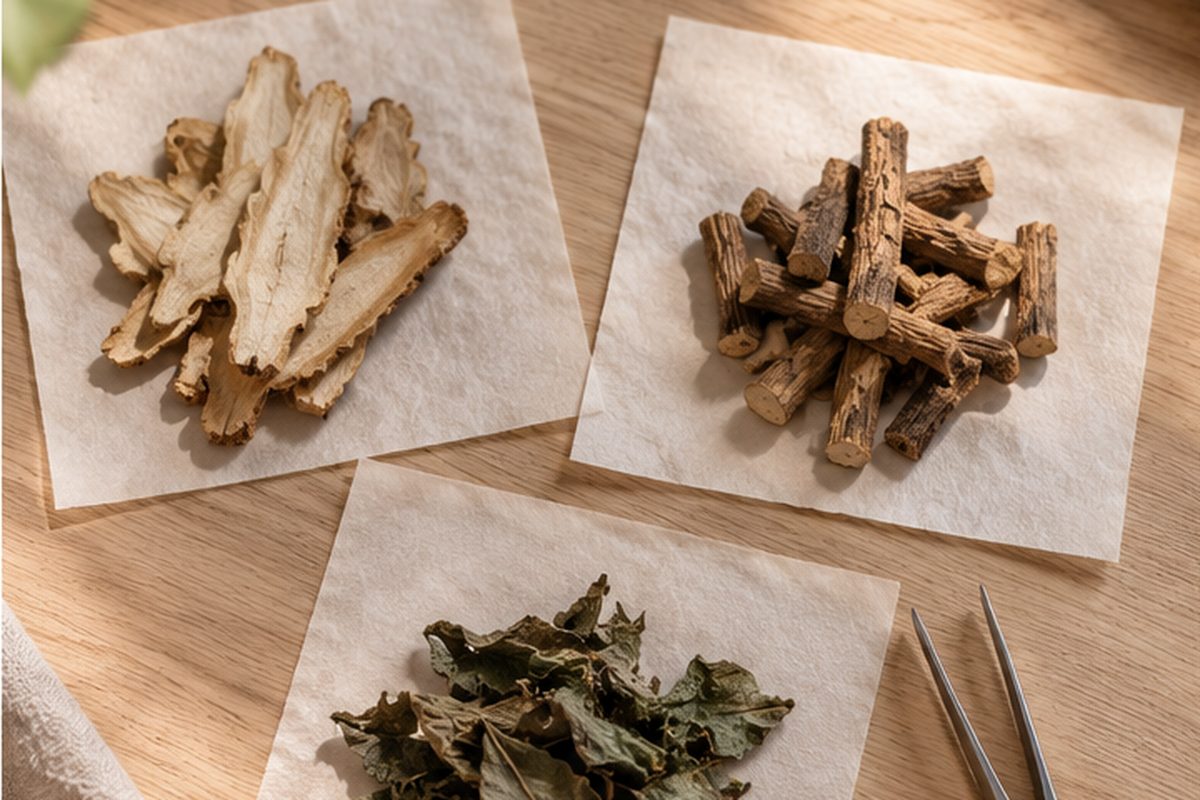
② Where things went wrong: one name, plants from two families. Hong Kong's recorded cases were 寻骨风 (Aristolochia family) used in place of 白英 (nightshade family), and 广防己 (Aristolochia family) in place of 防己 (of the 防己 family), leading to adverse reactions to Chinese medicine. [HK-CMRO]
The same page sets the herbs "without aristolochic acid" beside those "with" it: 白毛藤 against 寻骨风, 川木通 against 关木通, 防己 and 川木香 against 广防己 and 青木香, each with its botanical source and appearance. [HK-CMRO] Similar names, similar looks, different plants: that is why the checkpoint sits at identification and sourcing.
③ Why "registered" is the checkpoint for this class. NPRA's guideline states that prohibited ingredients are not allowed in the formulation of natural products registered by the Authority, and that the whole Aristolochia genus is totally banned. [NPRA-A7] For botanicals known or suspected to contain aristolochic acid (List A), and botanicals that may be adulterated with it (List B), products containing them must be sent to a governmental doping centre for testing, with the result attached to the registration form. [NPRA-A7]
List B includes 木通 (Akebia), 川木通 (Clematis armandii), 川木香 (Vladimiria souliei), and Stephania species other than 粉防己. [NPRA-A7] 川木通 and 川木香 are the very two herbs set beside 关木通 and 青木香 on the Hong Kong page. [HK-CMRO] And 粉防己 itself (Stephania tetrandra, the "防己 of the 防己 family" on that Hong Kong page) is separately listed in Malaysia's banned table, with the reason "Reported to cause kidney toxicity". [NPRA-A7]
Put together: a product with a MAL number is one whose formulation was checked against the banned list, and, if it contains a List A or List B plant, was tested before registration. Hong Kong applies the same logic to proprietary medicines containing Asarum herbs: "no aristolochic acid detectable" is written into the quality standard. [HK-CMRO] "Registered" means "checked for this class". It does not mean "everything about it is safe".
④ Where this checkpoint does not reach. Loose herbs and a practitioner's own dispensing are exempt from registration (section III), so they do not pass through that formulation review. There, the checkpoint is point ②: sourcing and identification, whether the person composing the mix knows the plant.
These are the regulators' own listed examples, not a list where anything unlisted is safe.
A note: this section is general information only. For conditions like these, follow your doctor's diagnosis and treatment, and seek medical attention when you need it.
III. "Can I take what I bought?" — look for the MAL number first
In Malaysia, packaged Chinese proprietary and traditional medicines must be registered with the Ministry of Health before they can be sold [MOH-PSP]. Four things to look at.
- ① The MAL number. The Ministry of Health's Pharmaceutical Services Programme explains: a valid registration number begins with "MAL", followed by 8 digits, and ends with a letter indicating the registration category; registered medicines must carry both the registration number (e.g. MAL20125467T) and a Meditag hologram label on the label or packaging. [MOH-PSP]
- ② The final letter T. The category list shows "T – Natural Products/ Traditional Medicines" [MOH-PSP]; Chinese proprietary medicines are generally classified under T.
- ③ How to check. The Ministry's page says the registration status of a product can be checked on the NPRA website by product name, registration number, holder name, active ingredient, or manufacturer/importer name; the NPRA Product Status app can be downloaded from the Google Play Store; NPRA can be called on 03-78835400; and the validity of the hologram label can be checked through a pharmacist at a nearby hospital, clinic or pharmacy. [MOH-PSP] The search page is NPRA's QUEST 3+ Product Search (https://quest3plus.bpfk.gov.my/pmo2/index.php), searchable by product name or registration number. [NPRA-Q3]
- ④ Loose herbs and a practitioner's own dispensing sit outside the number system. The NPRA guideline lists preparations that do not require registration, including an "extemporaneous preparation prepared and given directly to the patient by any traditional practitioner during the course of treatment", and a traditional preparation of natural origin "produced only through drying, without any treatment/process involved. E.g. raw herbs". [NPRA-A7] The packet a medical hall weighs out for you has no MAL number because that is how the system works. Its checkpoint is the shop's sourcing and the person who put the mix together.
💡 Remember: packaged products, look for the MAL number and Meditag; loose herbs, look at the source and the person who composed the mix. Two different checkpoints. If either is missing, ask one more question.
IV. One table — what you are holding, and how to check it
| Situation | What can be verified | Usual practice | When to see a doctor or practitioner first |
|---|---|---|---|
| Packaged proprietary medicine from a pharmacy or medical hall | Registered medicines carry a MAL number and Meditag [MOH-PSP] | Check the number before buying; if unsure, search QUEST 3+ [NPRA-Q3] | If a contraindication on the label (e.g. pregnancy, lactation) applies to you [SG-2025], ask a practitioner first |
| Pre-mixed packets or loose herbs from a medical hall | Raw herbs are exempt from registration [NPRA-A7], so they carry no MAL number | Ask what is in it and who it was composed for; store it as in section V | On Western medication, pregnant, or giving it to a child: ask first |
| A practitioner's prescription (raw herbs or concentrated granule powder) | A preparation dispensed directly to the patient during treatment is exempt from registration [NPRA-A7]; dose and combination were decided for your situation | Take it as the prescription says; do not adjust on your own | Unwell after taking it: stop that herb and contact the practitioner; breathlessness, facial swelling or confusion: call 999 now |
| Bought online, brought back from overseas, or unlabelled | Anything without a registration number sits outside that review [MOH-PSP]; Singapore's Health Sciences Authority found in tests of products bought online or from illegal sources that tablets in the same bottle could contain ingredients inconsistent with the label and could be contaminated with banned toxic substances [SG-2025] | Check for a MAL number first (section III); no number and no explainable source: do not take it, dispose of the whole packet | Already taken and unwell: stop and contact the practitioner; breathlessness, facial swelling or confusion: call 999 now |
| Herbal tea from a 凉茶 shop or brewed at home | In TCM theory, 凉茶 is cooling in nature (see the FAQ below); the Hospital Authority notes that 凉茶 has no clear unified standard and each shop's formula may differ [HA-SP] | Not as a daily substitute for water; details in "Is Daily Herbal Tea Harmful?" (/is-daily-herbal-tea-harmful/) | Chronic condition under regular review, pregnant or breastfeeding: ask first |
This table stops at "how to check". Whether a particular herb suits you can only be judged with your situation in view, and that belongs to the consultation.
V. Storage — herbs and 凉茶 ingredients in a hot, humid climate
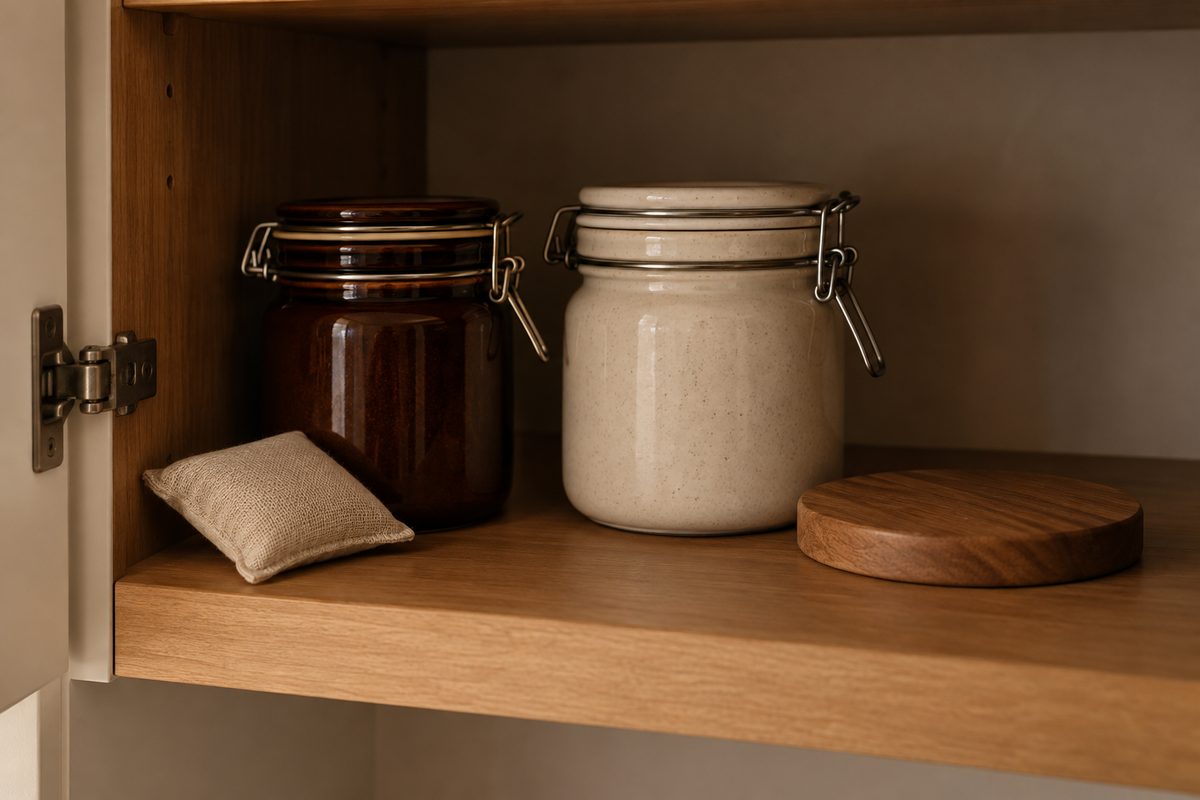
Hong Kong's Chinese Medicine Regulatory Office explains: damage by rodents, insects or micro-organisms, and temperature, humidity and sunlight, all affect the quality of herbs. [HK-CMRO-STORE]
The same article continues: in general, processed herbs should be stored in a cool, dry place, for example honey-fried herbs should be refrigerated to prevent mould; aromatic herbs contain volatile oils and should not be stored for long; and in general, herbs that have been stored too long should not be used. [HK-CMRO-STORE]
Why humidity is the key. The same article gives the reasons. First, mould: micro-organisms are on its list of damaging factors, and its example is that honey-fried herbs should be refrigerated to prevent mould. [HK-CMRO-STORE]
Second, the herb's own enzymes. The article states that herbs containing glycosides also contain an enzyme able to hydrolyse those glycosides, and that under a certain humidity and temperature the enzyme breaks the glycoside constituents down, lowering their content. [HK-CMRO-STORE] In plain terms: a packet that has taken in moisture may look fine on the outside, yet its constituents may already be reduced.
Third, volatile oils. Aromatic herbs contain volatile aromatic oils and should not be stored for long. [HK-CMRO-STORE] Time changes what is in a herb: the article's example is 陈皮 (aged tangerine peel), where after a period of storage the volatile-oil content falls and the hesperidin, which the article names as chiefly responsible for its effect, rises in relative terms, which is why earlier generations held that 陈皮 should be used aged; but in general, herbs stored too long should not be used. [HK-CMRO-STORE]
Bringing those sentences into a Malaysian home, our practice is:
- Sealed, away from light and heat. Move an opened packet into a sealed jar or zip bag and keep it somewhere cool; not next to the stove, not in the car.
- Watch the moisture from air-conditioned rooms. Carried in and out of an air-conditioned room, packaging sweats on the outside, and moisture that reaches the herbs makes them damp. Keep it in one place; do not move it back and forth.
- Honey-fried and oily herbs go in the fridge. For example, anything labelled 蜜炙 or sticky to the touch. The oily-herb rule is our own practice; Hong Kong's guidance mentions honey-fried herbs only.
- Three discard signals: mould, insect damage, off-smell. Any one of them means the whole packet goes. Do not wash or sun-dry it and use it anyway.
- The same goes for 凉茶 ingredients. They are a combination of herbs, so the storage rules are the same. As for drinking it, TCM theory holds that 凉茶 is cooling in nature and is not for drinking daily in place of water; details in "Is Daily Herbal Tea Harmful?" (/is-daily-herbal-tea-harmful/).
⚠️ A safety note: there is no single number of days for "too long". Hong Kong's guidance is that herbs stored too long should not be used [HK-CMRO-STORE]; if you cannot say when a packet was bought, treat it as too long.
VI. Situations that need extra care
Grouped by situation, not by constitution.
- On Western medication. How herbs and Western medication are arranged is in "Can You Take Chinese Herbs With Western Medication?" (/chinese-herbs-with-western-medicine/). Let both your TCM practitioner and your doctor know what you take; never stop or adjust your Western medication on your own.
- Surgery coming up. Singapore's HealthHub (Ministry of Health, content by the Health Sciences Authority) says: if you are scheduled for a surgical operation, inform your doctor about any Chinese proprietary medicine you are taking; some products may interfere or interact with anaesthetics and other medicines used during surgery, and you may also be required to stop taking them before the operation. [SG-2025] Whether and when to stop is the surgical team's call.
- Pregnant, trying, or breastfeeding. Singapore's HealthHub (Ministry of Health, content by the Health Sciences Authority) notes that Chinese proprietary medicines carry information on documented side effects and contraindications, such as pregnancy and lactation, on their labels. [SG-2025] If the label says so, do not use it; if the label says nothing, ask a practitioner first.
- Infants under 12 months, and children. Singapore's HealthHub (Ministry of Health, content by the Health Sciences Authority) notes that in general, Chinese proprietary medicine should not be given to infants under 12 months of age unless advised by a TCM practitioner. [SG-2025] For older children, give the practitioner the age, the weight and what is in the packet together.
- Older adults, chronic conditions under regular review, and anyone with an existing kidney or liver condition. Tell both your doctor and your practitioner what herbs you take, and leave prescribed medication as it is. TCM and Western medicine complement each other; it is not a choice between them.
- ⚠️ I feel unwell after taking herbs: If you experience discomfort or an unusual reaction, stop taking the herbs and contact your practitioner. Do not stop or adjust your Western medication on your own. If you experience a severe allergic reaction (such as difficulty breathing or facial swelling) or loss of consciousness, call 999 or go to the nearest emergency department.
- ⚠️ I plan to increase or decrease the dosage myself: Never do this. The dosage was determined through assessment. Adjusting it yourself is equivalent to changing the treatment plan on your own.
A note: this section is general information only. For conditions like these, follow your doctor's diagnosis and treatment, and seek medical attention when you need it.
Fitting it into life in Malaysia
- Chinese proprietary medicine on the shelf at Guardian, Watsons and other pharmacies: turn the box over and look for the MAL number and Meditag; if you cannot find them, ask the pharmacist at the counter.
- Packets weighed out at a medical hall, confinement (坐月子) packs: no MAL number is normal (section III). Ask the shop what situation the packet was composed for, and store it as in section V.
- A cup from the 凉茶 shop, canned 凉茶: drink a fresh brew the same day; read the nutrition label on a can. Whether to drink it daily, see section V.
- Direct-sales supplements, "secret family recipes" brought from overseas or bought online: no label, contents unclear, do not take it. That it helped someone else does not make it composed for you. Why a supplement whose label says 红曲 or "red yeast rice" is something to tell both your doctor and your practitioner is in the red yeast rice passage of "Can You Take Chinese Herbs With Western Medication?" (/chinese-herbs-with-western-medicine/).
- A colleague organising a group buy of a particular herb: a recommendation is not an assessment. If you want to try it, photograph the contents and let a practitioner look first.
- Air-conditioned rooms and cars: neither is a place to keep herbs. Keep them in one cool spot at home and carry only the day's portion.
- A kopi with your herbs during crunch season: see the last question below.
Frequently asked
Do Chinese herbs harm the kidneys? The class with a record is Aristolochia herbs containing aristolochic acid: Malaysia's NPRA lists all Aristolochia species among botanicals banned due to reported adverse event, with the reason that they contain aristolochic acid reported to cause kidney toxicity [NPRA-A7]; Hong Kong stopped importing and selling these herbs and their preparations from 1 June 2004 [HK-CMRO]. Registered products may not contain these prohibited ingredients in their formulation [NPRA-A7]. What harm it does, and why registration screening is the checkpoint for this class, is in section II. Whether any other herb suits you is decided by a practitioner who has seen your situation. If you have an existing kidney condition, follow your doctor's diagnosis and treatment.
Can I drink 凉茶 every day? One thing first: "凉茶" is not one thing. The Hong Kong Hospital Authority notes that 凉茶 has no clear unified standard and each shop's formula may differ; its example is 五花茶, where formulas on the market variously use 鸡蛋花 (frangipani), swap it for 葛花 (kudzu flower), or use 绵茵陈 and 夏枯草 instead. [HA-SP] So "I drink 五花茶 every day" may mean three different combinations. TCM theory holds that 凉茶 is cooling in nature and is not for drinking daily in place of water. When, how often, and which shop's which tea depends on your situation at the time, and a practitioner explains that. The difference between a fresh brew from a 凉茶 shop, a home brew and a canned one is in "Is Daily Herbal Tea Harmful?" (/is-daily-herbal-tea-harmful/).
How do I tell whether a product is registered? Look on the packaging for a registration number beginning with MAL, followed by 8 digits and a final letter, and for the Meditag hologram label [MOH-PSP]. If unsure, search NPRA's QUEST 3+ Product Search by product name or registration number [NPRA-Q3], or ask a pharmacist at a pharmacy to check the hologram for you [MOH-PSP].
How long can Chinese herbs be kept? There is no single number of days. Hong Kong's Chinese Medicine Regulatory Office says that in general herbs stored too long should not be used; aromatic herbs should not be stored for long; for example, honey-fried herbs should be refrigerated to prevent mould. [HK-CMRO-STORE] For packaged proprietary medicine, go by the expiry date on the label. For loose herbs, watch for three signals: mould, insect damage, off-smell; any one of them means discard.
Can children drink 八珍汤? Separate two things first: a few herbs in a family soup is herbal food (药膳); a full set measured to a formula is a prescription. Singapore's HealthHub (Ministry of Health, content by the Health Sciences Authority) notes that in general, Chinese proprietary medicine should not be given to infants under 12 months of age unless advised by a TCM practitioner. [SG-2025] For older children, give the practitioner the age, the weight and what is in the packet together, and follow the practitioner's written instruction.
Can I drink coffee while taking Chinese herbs? The Chinese Medicine Regulatory Office's pamphlet "General Knowledge of Taking Chinese Medicines" states that Chinese medicine is generally taken with warm water and that, unless the TCM practitioner instructs otherwise, strong tea is generally not to be drunk at the same time; the pamphlet's pictograms list coffee among the things not to take together with tonifying herbs and with cooling herbs. [HK-CMRO-PAM] The pamphlet gives no number of hours for coffee. Which class your prescription belongs to, and how far apart to keep the coffee, is a question for the practitioner who wrote it.
A note: this section is general information only. For conditions like these, follow your doctor's diagnosis and treatment, and seek medical attention when you need it.
In closing
✅ Remember these:
- The class with a record is Aristolochia herbs containing aristolochic acid, listed as a banned ingredient by Malaysia's NPRA [NPRA-A7].
- A registered natural product's formulation may not contain prohibited ingredients, and products containing List A or List B plants must be tested first [NPRA-A7]; "registered" means checked for this class, not that everything about it is safe.
- Packaged products: look for the MAL number and Meditag [MOH-PSP]; if unsure, search QUEST 3+ [NPRA-Q3].
- Loose herbs and a practitioner's own dispensing are exempt from registration [NPRA-A7], so they carry no MAL number; the checkpoint is the source and the person composing the mix.
- Sealed, cool, away from air-conditioning moisture; humidity lets herbs go mouldy and lowers their constituents [HK-CMRO-STORE]; mould, insect damage or off-smell means discard.
- On Western medication, before surgery, pregnant or breastfeeding, infants, or with a long-term condition: ask your doctor and your practitioner first.
❌ Don't do this:
- Don't take an unlabelled product whose contents cannot be explained, whoever gave it to you.
- Don't wash or sun-dry mouldy herbs and use them anyway.
- Don't stop, reduce or adjust any Western medication because you have started taking herbs.
👉 If you are unsure whether "this packet of herbs, or this bottle of proprietary medicine in my hand, is actually right for me to use", you are welcome to book an online consultation with HansMed, where a practitioner registered under the T&CM Act 2016 assesses it with you.
Reviewed by Ms. Koo Shuang, a TCM practitioner registered with Malaysia's Traditional and Complementary Medicine Council under the T&CM Act 2016, practising in gastroenterology, dermatology, respiratory and women's health.
Sit with a licensed TCM practitioner from wherever you are.
HansMed Modern TCM
For general wellness education only — not medical advice. Consult a registered TCM practitioner for personal guidance.


