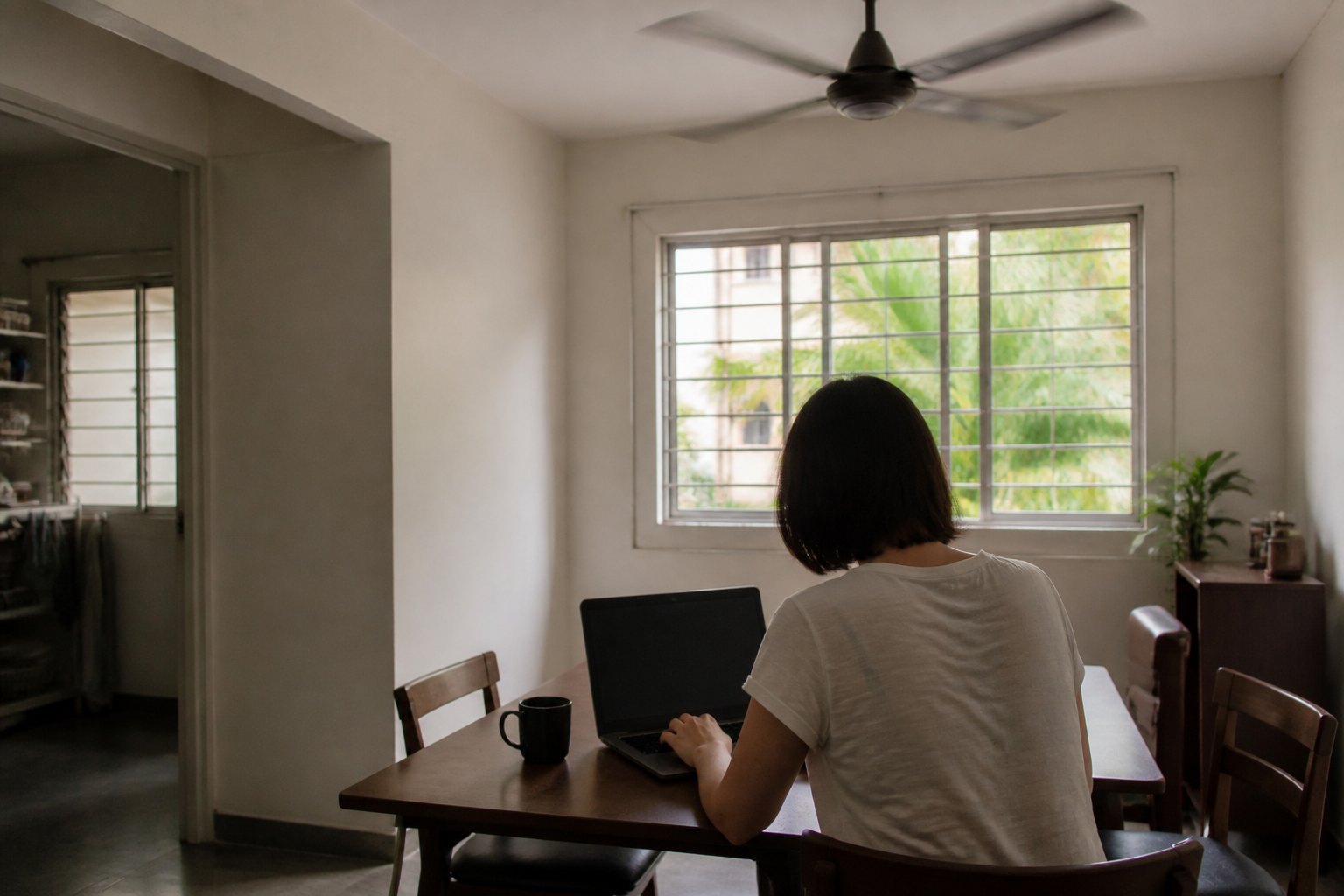
The most common question about online TCM consultation isn't whether it's convenient. It's this:
"Can a practitioner really assess me through a screen?"
That is a fair question and it deserves a complete answer.
Online consultation does some things well and other things not at all. This article covers both sides — not to talk you into it or out of it, but so you know what it suits.
1. What online consultation does well
Starting with the part that works.
History-taking loses almost nothing. The largest part of a TCM consultation is questioning — your routine, sleep, appetite, medical history. None of that depends on physical contact, and doing it from home takes nothing away from it.
Access. No leave to take, no traffic, no putting it off because the clinic is far or getting there is difficult. If you are caring for someone at home, a full conversation is still possible.
Better preparation. You can upload previous medical reports before the session, so the practitioner already has your background rather than starting from zero.
Particularly suited to follow-ups. Once a first consultation has laid the groundwork, follow-ups are largely about what has changed and what to adjust — a conversation that often runs more efficiently online.
Records. Reports, prescriptions and consultation records stay in your account for you to consult at any time.
2. Which of the four examinations work online
TCM gathers information through four channels — looking, listening/smelling, asking and pulse taking — known together as the four examinations. (Your First TCM Consultation explains what each one involves in the clinic.) Taking them one at a time:
Looking — largely workable. Video allows observation of complexion and general presentation. The tongue, which TCM pays close attention to, is observed from a photograph you upload. Taken in good light, without staining food beforehand, the clarity is generally sufficient.
Listening and smelling — partly workable. Voice comes through on a video call — how strong the speech is, shortness of breath, the sound of a cough. Smell does not transmit. That part is genuinely lost.
Asking — fully workable. This is the channel that loses nothing online: history-taking does not depend on physical contact, and doing it from home does not diminish it.
Pulse taking — cannot be done.
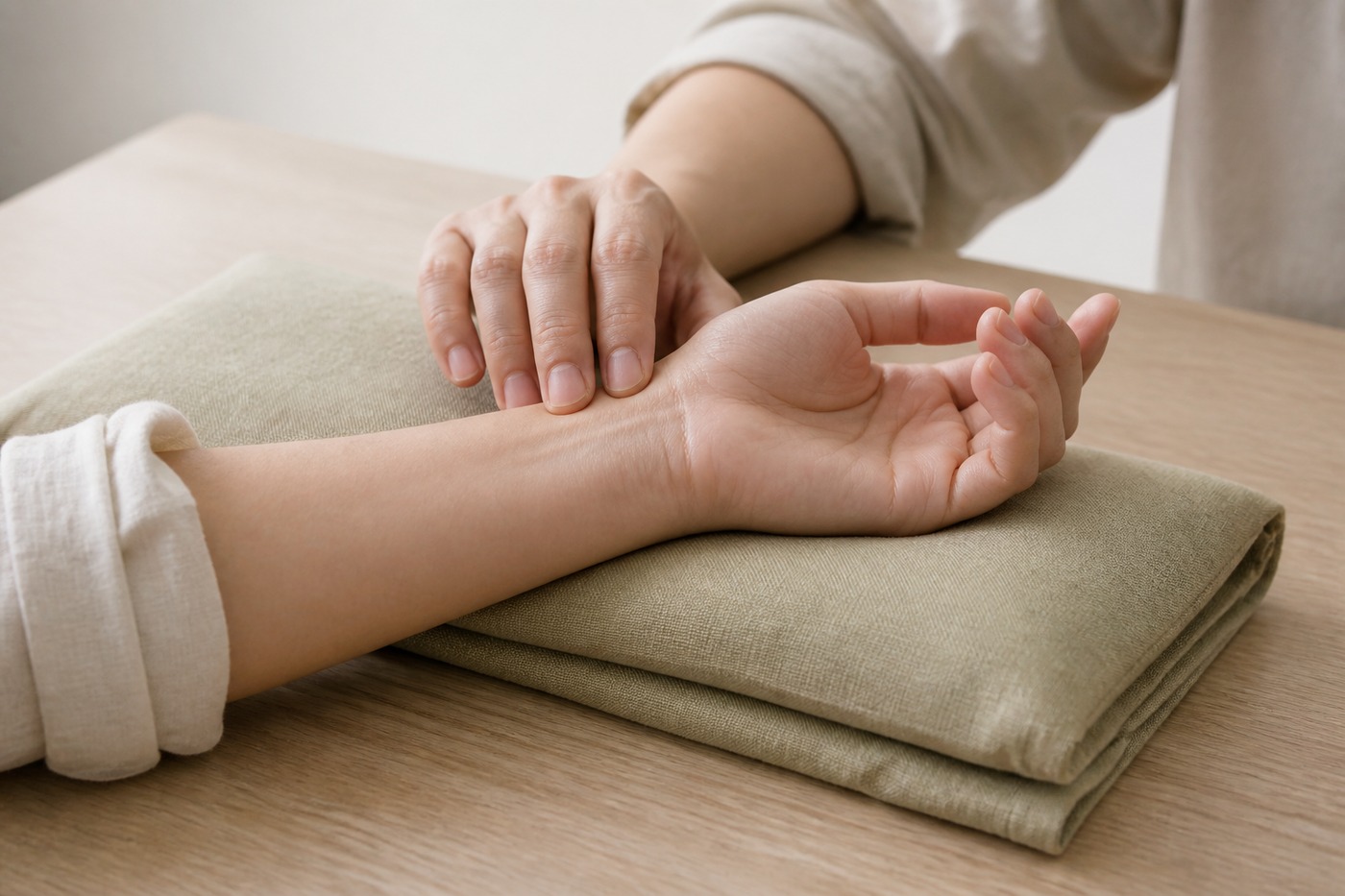
Pulse taking requires the practitioner's fingers on your wrist. It cannot be done remotely.
That is a real limitation of online consultation and we won't talk around it. But to be clear about what it does and does not mean: one examination missing does not make the consultation invalid. The next section covers how a practitioner works without it.
3. How the practitioner works without the pulse
It depends on the situation — and that dependency is the point worth explaining.
A TCM assessment is never built on one channel alone. The four examinations are designed to corroborate each other. With one missing, the practitioner works from the remaining three plus more detailed questioning to compensate.
In practice this means:
- For concerns that are information-rich and centred on history and daily routine, an online consultation gathers a fairly complete picture
- For anything requiring physical examination, inspection of an actual area, or hands-on treatment, online is not the right format
A responsible practitioner who judges the information insufficient during an online consultation will tell you so, and point you to a registered practitioner you can see in person, rather than stretching to an answer anyway. You can reasonably expect that.
4. What online cannot do
Beyond pulse taking, these cannot be done remotely by their nature:
- Acupuncture, cupping, gua sha, moxibustion, tuina — anything hands-on
- Physical examination — palpating the abdomen, checking joint movement, feeling swelling
- Anything urgent
The third deserves emphasis:
For emergencies, injuries, severe or sudden symptoms, difficulty breathing, chest pain, or any change in consciousness — seek immediate medical attention or go to an emergency department. Do not book an online consultation.
Online TCM consultation is for non-urgent health concerns. That is not a disclaimer. That is the definition of the service.
5. When online is a good fit
Drawing the above together, online consultation tends to suit:
- Non-urgent, ongoing concerns — routine, sleep, digestion, energy: the kind of thing where history-taking does most of the work
- Follow-ups — the groundwork is laid at the first consultation; follow-ups are largely about what has changed and what to adjust
- Practical constraints — hard-to-move work hours, living far out, limited mobility, caring for someone at home
- Wanting to understand the TCM view first — a full conversation before committing to anything
When online is not the right choice:
- Anything needing hands-on treatment
- Anything needing a specific area examined
- Where the practitioner judges the information insufficient
- Anything urgent
6. How a HansMed online consultation works
Booking. Choose a time slot and consultation language, and a specific practitioner if you prefer one — that is a separately-priced option, and current fees are on the booking page. If you have previous medical reports, upload them in advance so the practitioner has fuller background before the session.
The consultation. A registered TCM practitioner conducts a video consultation of roughly 15–20 minutes, covering tongue and voice observation and detailed history-taking.
The tongue photograph. The image you upload is processed by the system, then reviewed and decided on by a registered TCM practitioner. The judgement stays with the practitioner. Nothing is concluded on the practitioner's behalf.
Dispensing. If a prescription is issued, it routes to a partner pharmacy where a licensed pharmacist completes quality verification before dispatch — typically 1–2 working days within the Klang Valley.
Records. Reports, prescriptions and consultation records are kept in your account. Personal data is handled under the Personal Data Protection Act 2010 (PDPA).
In person. In-person consultations are coming soon.
7. Common questions
Is an online consultation a "real" consultation? Yes. You are seen by a practitioner registered under the T&CM Act 2016, and the questioning, assessment and any prescription are theirs. What changes is the format, not the nature of the care.
Can I request a specific practitioner? Yes — you can select one when booking, or let the system assign. Choosing a specific practitioner is priced separately; see the booking page.
What should I prepare? A list of everything you currently take (Western medication, supplements and tonics included), your questions written down, and a quiet corner with good light. Avoid strongly-coloured food or drink shortly before photographing your tongue.
Can I see a Western doctor at the same time? Yes, and both sides should know. TCM is complementary care, not a replacement. If you are on Western medication, tell your TCM practitioner; equally, your Western doctor should know you are taking Chinese herbs.
Do I have to buy medicine after an online consultation? No. Whether anything is prescribed is the practitioner's judgement, and an online consultation may equally end with adjustments to routine or diet.
In closing
The value of online TCM consultation is that it makes the non-urgent health conversation accessible — no leave to take, no traffic, no putting it off because the clinic is far.
Its limits are equally clear: no pulse taking, no hands-on treatment, nothing urgent.
Knowing what it can and cannot do is what lets you judge whether it fits where you are right now.
👉 If you are unsure whether an online consultation suits your situation, you are welcome to book an online consultation with HansMed, where a practitioner registered under the T&CM Act 2016 can assess it with you.
Sit with a licensed TCM practitioner from wherever you are.
HansMed Modern TCM
For general wellness education only — not medical advice. Consult a registered TCM practitioner for personal guidance.


