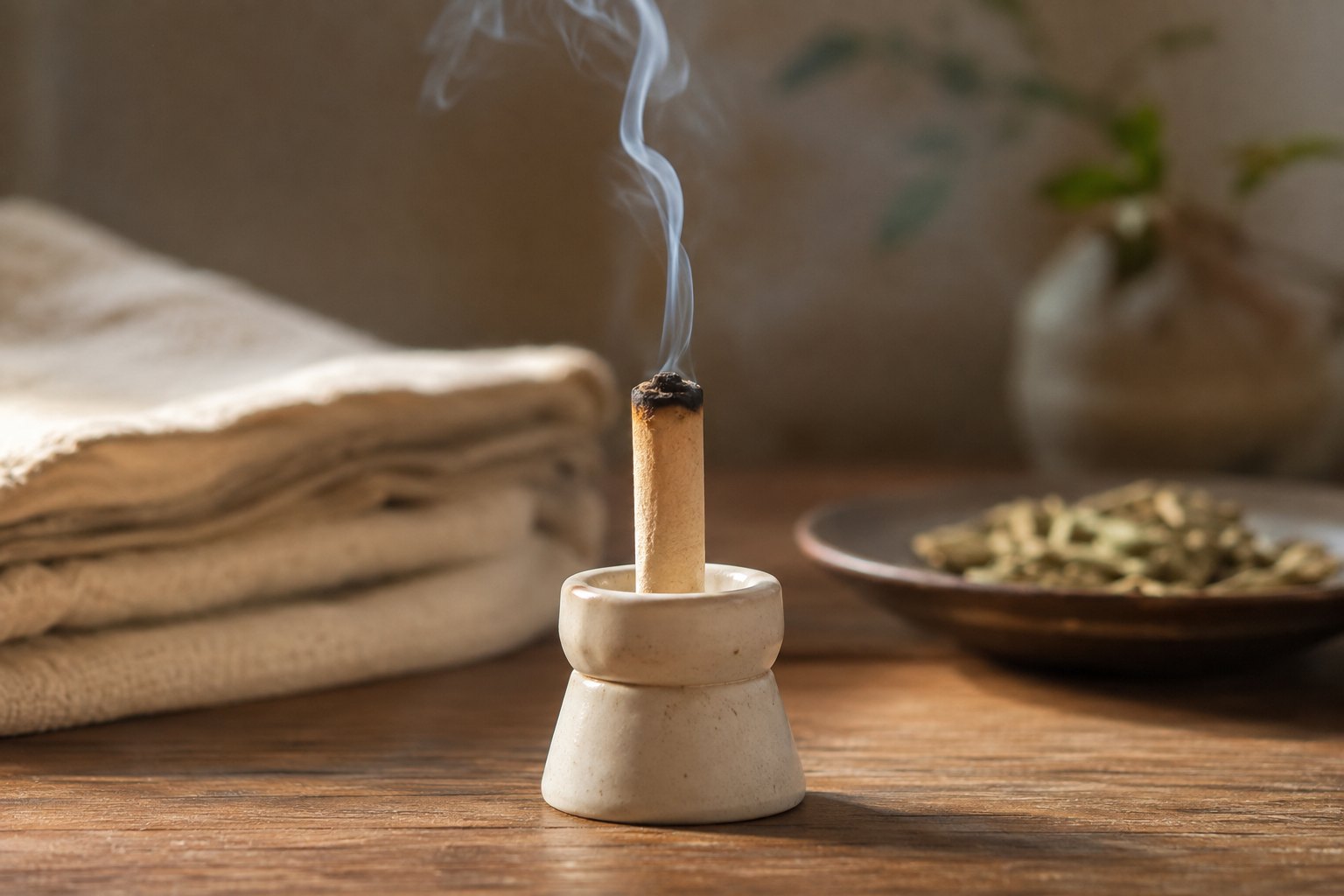
A question that comes up often is: "Isn't moxibustion just burning the skin?" "Can I do it at home?" This article explains what moxibustion is, what a typical session involves, and the safety points you should know.
What It Is
Moxibustion is an external therapy within traditional Chinese medicine (TCM). In simple terms, dried mugwort leaves are made into a stick or cone, lit, and the resulting warmth is applied to specific areas of the body. In TCM theory, this is understood as a way to "warm and unblock the channels" and "promote the flow of qi and blood." It should be noted that the concepts of channels and qi are theoretical frameworks in TCM, not equivalent to anatomical structures such as blood vessels or nerves.
Moxibustion does not target any specific disease. Whether it is suitable, and for what purpose, is a judgement a registered TCM practitioner makes after a consultation — the assessment comes before the method.
What Happens During a Session
In a TCM clinic that offers this service, a typical session follows these steps:
- During the consultation, the practitioner will first understand your overall condition, including medical history, current medications, and any skin sensitivities.
- If moxibustion is considered suitable, the practitioner will explain the areas to be treated and the method to be used.
- During the procedure, the lit moxa stick is held above the skin, or placed in a moxa box. The operation itself is physical — the burning moxa produces warmth, which is visible and verifiable. As for what this means in TCM theory, that belongs to the framework of channels and qi, which is not the same as a modern physiological explanation.
- Throughout the session, the practitioner will observe the skin's response and adjust the distance and duration accordingly.
This clinic currently offers online consultations; in-person services have not yet been launched. The process described above reflects common practice in TCM clinics that offer moxibustion, not the specific operations of this clinic.
How It Feels
The warmth during moxibustion is often described as "comfortably warm," "like a hot water pack," or "slightly prickly." Tolerance to heat varies from person to person. If you experience unbearable burning or pain during the session, tell the practitioner immediately — do not endure it.
After moxibustion, the treated area may appear reddened. This is a skin response that can occur after warmth application. If blisters or visible burns develop, contact your practitioner.
Safety, Hygiene, and What to Tell Your Practitioner Beforehand
Moxibustion involves open flame and high heat. Burns are a genuine risk — one reason moxibustion belongs in trained hands. Clinics generally have ventilation and safety arrangements, and take appropriate fire safety measures. If you are considering moxibustion, confirm that the practitioner holds relevant qualifications.
Before a session, be sure to inform your practitioner of the following:
- Whether you are pregnant or planning to conceive
- Whether you have diabetes, skin sensation issues, or circulatory problems
- Whether you have a cardiac pacemaker
- Any medications you are currently taking, especially blood thinners (do not stop any medication on your own — discuss it with your doctor first)
- Any history of skin allergies or past burns
A note: this section is general information only. For conditions like these, follow your doctor's diagnosis and treatment, and seek medical attention when you need it.
Possible Reactions Afterwards and When to Contact Your Practitioner
Redness at the treated site can occur after moxibustion; the time it takes to fade varies from person to person. If the redness persists or if blisters, broken skin, or signs of infection develop, contact your practitioner.
Contact your practitioner if you experience any of the following:
- Increasing local pain
- Blisters that enlarge or ooze
- Fever or chills
- Unusual skin discolouration
When Moxibustion Is Not Suitable
Common precautions listed in TCM literature include: high fever, convulsions, loss of consciousness, broken or infected skin, and the abdominal and lower back areas during pregnancy are generally considered unsuitable for moxibustion. In addition, people with diabetes or reduced sensation may not perceive heat accurately, which increases the risk of burns and requires extra caution.
If you are in any of the following situations, call 999 or go to the nearest emergency department immediately: persistent high fever, confusion, severe pain, or extensive burns.
A note: this section is general information only. For conditions like these, follow your doctor's diagnosis and treatment, and seek medical attention when you need it.
Frequently Asked Questions
Q: Can moxibustion be done every day? A: Frequency depends on individual circumstances and the method used. It is best determined by a registered TCM practitioner rather than self-scheduling.
Q: Can moxibustion cause burns? A: Burns are a genuine risk, especially with unsupervised home use. When performed by a registered TCM practitioner, the skin is monitored and the distance adjusted. If you feel burning pain, say so immediately.
Q: Can I shower after moxibustion? A: It is generally advisable to rest briefly and allow the skin to return to normal temperature before showering. The exact time varies from person to person. If the skin is broken or blistered, avoid water contact and contact your practitioner.
Q: Can moxibustion help with weight loss? A: Moxibustion is not a weight-loss method. Weight management involves diet, exercise, and overall lifestyle habits. If you have weight-related goals, seek comprehensive advice from nutritional and medical professionals.
Q: What is the difference between moxibustion and acupuncture? A: Acupuncture uses fine needles to stimulate specific points, while moxibustion applies warmth from burning moxa. In TCM theory, they serve different purposes. Whether either is suitable for you requires assessment by a practitioner.
Q: Can moxibustion replace Western medication? A: No. Moxibustion is a supportive practice and should not replace any Western medical treatment or medication. If you are taking medication, do not stop on your own — discuss it with your doctor.
👉 If you are unsure whether moxibustion is suitable for your situation, you are welcome to book an online consultation with HansMed, where a practitioner registered under the T&CM Act 2016 can assess it with you.
Sit with a licensed TCM practitioner from wherever you are.
HansMed Modern TCM
For general wellness education only — not medical advice. Consult a registered TCM practitioner for personal guidance.


