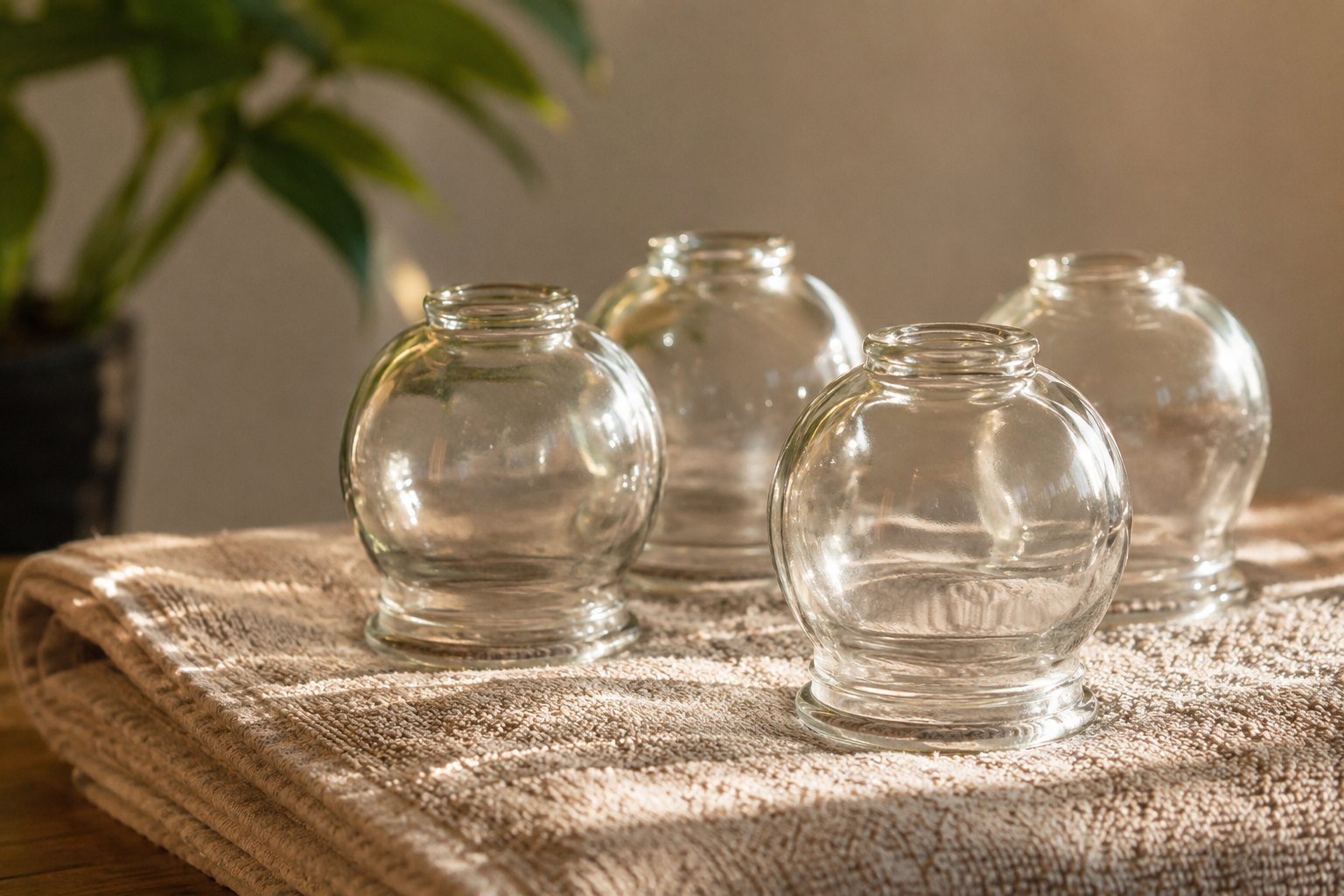
"What does cupping actually do? Does a darker mark mean my body is in worse shape?" A question that comes up often is this one, and it is what people searching for "cupping" usually want answered too.
The short answer first. Cupping is a TCM external therapy that uses a cup to create negative pressure on the skin and draw the skin up into it.
The Hong Kong Department of Health's Chinese Medicine Regulatory Office describes it as using a cup as the tool, removing the air inside by burning or other means to form a vacuum, so that the cup attaches to a specific part of the body or an acupoint on the skin [CMRO].
Three numbers people ask about, as public sources state them: the cups generally stay on for no more than 10 minutes [MOHW-TW]; the marks usually fade within days to two weeks [KWH][CC-2023]; and best not to shower for 30 minutes after cupping [MOHW-TW].
Six things below: what cupping is, what happens in one session, how cup retention, sliding cupping and wet cupping differ, what the marks are, which situations to mention first or see a doctor about, and how to look after the area afterwards.
I. What cupping is: negative pressure, four common methods, and what TCM theory says
It sits within the broad "acupuncture therapies" group. The Hong Kong Chinese Medicine Regulatory Office says acupuncture therapy includes needling, moxibustion, cupping and others [CMRO]. Cupping itself does not use needles — except for method ④ below.
The World Health Organization's 2022 standard terminology for TCM defines cupping as a therapeutic method to create negative pressure by consuming the air inside the cup with fire or other methods and then placing the cup on the skin over the selected area [WHO-2022].
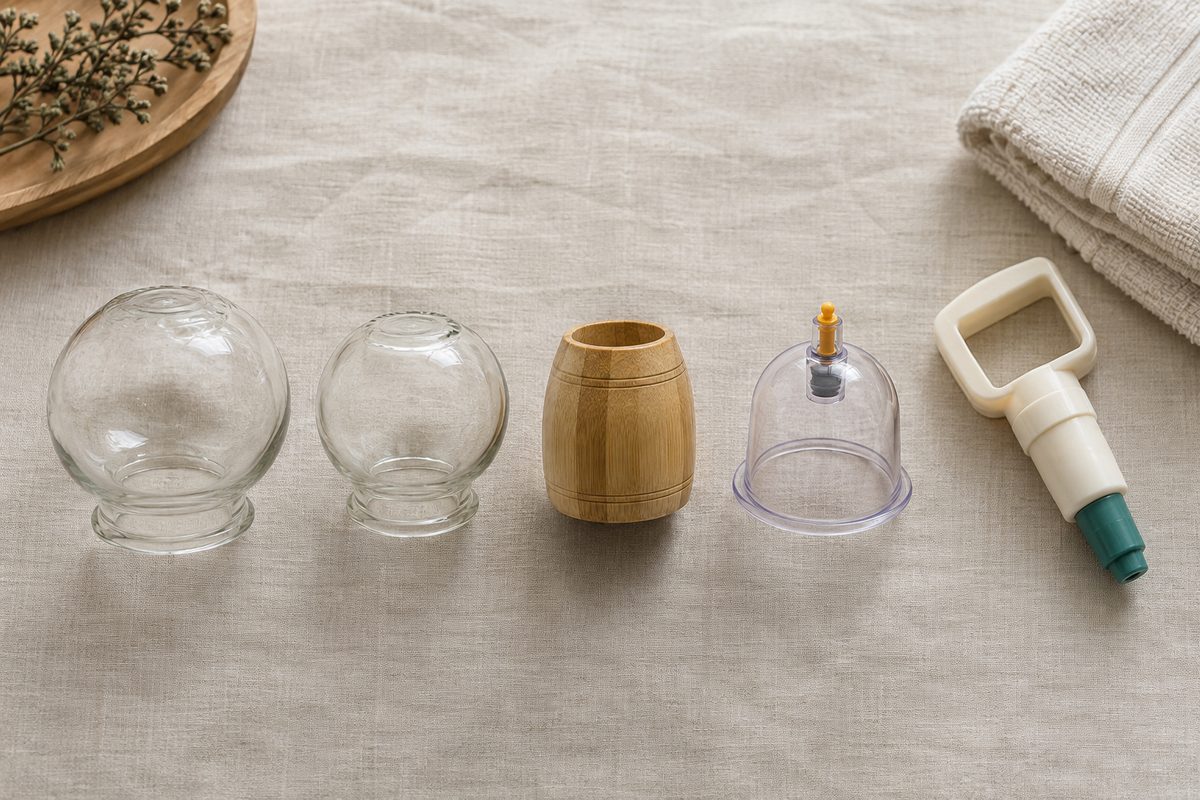
The four methods the same Hong Kong page lists [CMRO] — this is how each one works:
- ① Fire cupping: some of the air inside the cup is driven out with a flame, and the cup grips the skin. The traditional method Cleveland Clinic describes is setting an alcohol-soaked cotton ball alight inside the cup [CC-2023]; the same page's account is that the heat sends oxygen out of the cup, creating a vacuum, and the vacuum force pulls the skin up into the cup [CC-2023]. The WHO standard's wording: an ignited material is introduced inside the cup to consume the air, enabling the cup to suck itself onto the skin [WHO-2022].
- ② Flash cupping: the cup is attached and immediately removed, then attached again, repeatedly, until the skin flushes [MOHW-TW].
- ③ Sliding cupping: lubricant is applied first, then the attached cup is pushed and pulled back and forth along a set path [MOHW-TW].
- ④ Wet cupping (bleeding cupping): a needle lightly punctures the skin before the cup goes on [CC-2023]. This one draws blood; it breaks the skin.
Suction cups are also common now — a pump device draws the air out [MOHW-TW], which Cleveland Clinic calls the more modern approach [CC-2023]. No flame is involved. Glass, bamboo, ceramic and suction cups are all in common use [NATCM-2017].
How cup retention, sliding cupping and wet cupping actually differ, and what each requires — section III sets them side by side.
What TCM theory says. In TCM theory, cupping works through the stimulus of negative pressure, bringing blood to the local skin and causing local stasis [CMRO]; the theoretical action of the acupuncture-therapy group as a whole is to harmonise the organs, clear the meridians, and regulate qi and blood [CMRO].
Cleveland Clinic puts it directly: the suction breaks open tiny blood vessels under the skin, and that is what leaves the mark [CC-2023]. The two accounts answer different questions — one is about the theoretical action, the other about what physically happens in the skin.
For the difference between needling and cupping, see What Is Acupuncture (/what-is-acupuncture/).
💡 Remember: cupping generally involves no needles. If your practitioner mentions "wet cupping" (刺络拔罐), that method does break the skin — ask about it beforehand.
II. What actually happens in one session: minutes, cups, and what it feels like
This section describes what a TCM practitioner generally does. HansMed Modern TCM's in-person service is coming soon.
- ① Before: the area to be cupped is uncovered. Common sites are the shoulders, back, lower back, buttocks and the upper parts of the limbs — fleshy, muscular areas [MOHW-TW]; the position should be comfortable and sustainable for a while [MOHW-TW]. Puli Christian Hospital's patient leaflet adds: not too hungry or too full, loose clothing, and remove any medicated plasters first [PCH-2022].
- ② How many cups: Cleveland Clinic says providers use between three and five cups on average, possibly up to seven; more than seven in one session is uncommon [CC-2023].
- ③ How long the cups stay on: the Taiwan Ministry of Health and Welfare's operating manual for the non-medical cupping trade (suction cups) says the cups should generally stay on for no more than 10 minutes, shorter for thin or delicate skin, older people and children [MOHW-TW]; Puli Christian Hospital says about 5–10 minutes [PCH-2022]. Cleveland Clinic says only "several minutes" [CC-2023]. Your practitioner may adjust this — follow what they tell you.
- ④ What it feels like: often described as "tight", "achy" or "slightly swollen". Cleveland Clinic's wording: cupping should not cause pain, though you may feel some skin tightness during the procedure [CC-2023].
- ⑤ If you feel unwell during it: for local pain, the usual handling is to release some suction or remove the cup at once [MOHW-TW]. If you feel dizzy, chest-tight, faint, sweaty or short of breath, tell the practitioner immediately [PCH-2022] — this is what is called "cup fainting" (晕罐), which the Hong Kong regulator lists as a potential risk of improper operation [CMRO].
If it is wet cupping: China's national TCM administration's infection-control guideline requires the skin to be disinfected first and the needles to be one person, one use — disposable needles discarded after use, reusable ones sterilised for each person [NATCM-2017]. You can ask beforehand whether this is how it is done.
If you are afraid of needles or have fainted from injections before, say so beforehand — Cleveland Clinic notes that in rare instances people develop vasovagal syncope, most commonly after wet cupping in people who pass out with needle sticks [CC-2023].
Hygiene of the cups: the same guideline requires cups to be cleaned and disinfected after each person [NATCM-2017]. "Are the cups disinfected?" is a reasonable question to ask. Why these requirements go beyond ordinary cup retention — section III.
💡 Remember: longer is not better. Puli Christian Hospital's leaflet puts it plainly: too long and blisters may form [PCH-2022].
III. Cup retention, sliding cupping and wet cupping: what actually differs, and what each requires
Of the methods in section I, these three are the ones readers tend to run together. The difference is not "which is better" — different things happen in the skin, and what is required of the operator differs with them.
① Cup retention — what people usually mean by "cupping". The WHO standard's definition of cup retention is one line: leave the cup in place after suction [WHO-2022].
The Taiwan folk-practice manual spells out the end point: the cup is left on for a period, until the local skin flushes or the stasis under the skin turns purple-black, and then removed [MOHW-TW]. The skin is not broken; what is left afterwards is the mark described in section IV.
② Sliding cupping. The WHO standard's definition: lubricate the cup mouth and the selected area first, then slide the cup up and down while retaining its suction [WHO-2022]. The manual's requirement is even pressure, so the cup does not lose its seal and drop off, sliding until the local skin is slightly flushed [MOHW-TW].
Cleveland Clinic calls it running cupping: lotion or oil goes on the skin before the cups do [CC-2023]. The skin is likewise not broken; one thing is added — the lubricant. China's national TCM administration's infection-control guideline adds exactly one requirement for sliding cupping: the lubricant used must be kept clean [NATCM-2017].
③ Wet cupping (刺络拔罐). The WHO standard's definition: prick the area to be treated with a three-edged needle or lancet, then suck out blood with a cup [WHO-2022]. Of these three, it is the only one that breaks the skin and leaves blood in the cup. The same infection-control guideline therefore adds a whole further layer of requirements:
- The skin is disinfected before the needle [NATCM-2017].
- Needles are one person, one use: a disposable needle goes straight into a dedicated sharps container as injurious medical waste after use, and reuse is strictly prohibited; a reusable needle must be sterilised for each person [NATCM-2017].
- Cups already have to be cleaned and disinfected after each person [NATCM-2017]; a cup that has held blood — the guideline calls it a 血罐, a "blood cup" — when disinfected by hand in a chlorine solution, needs four times the concentration required for an ordinary cup: 2000 mg/L available chlorine against 500 mg/L (the guideline also allows other methods, such as moist-heat disinfection) [NATCM-2017].
- After the cups come off, any broken skin is covered with a sterile dressing [NATCM-2017].
Why the logic runs this way. The guideline's reference list includes the national standard on occupational protection against bloodborne pathogens [NATCM-2017]. Why the needle and the blood cup carry more requirements than plain retention — this is the article's reading, not the guideline's sentence — comes down to one word: blood.
These are standards for medical institutions, not a checklist for you to run at home. Their one use at a consultation: if the practitioner mentions wet cupping, ask "Are the needles single-use? Are the cups disinfected?"
| Cup retention | Sliding cupping | Wet cupping | |
|---|---|---|---|
| What the cup does | Stays in place after suction [WHO-2022] | Slides over lubricated skin while keeping its suction [WHO-2022] | The skin is pricked with a three-edged needle or lancet first, then the cup draws blood out [WHO-2022] |
| Is the skin broken? | No | No | Yes, with blood in the cup [WHO-2022] |
| What more is required of the operator | Cups cleaned and disinfected after each person [NATCM-2017] | The same, plus the lubricant kept clean [NATCM-2017] | The same, plus skin disinfected first, needles one person one use, blood cups disinfected at the higher concentration [NATCM-2017] |
| What you usually see afterwards | The mark (section IV) | Local skin slightly flushed [MOHW-TW] | Any broken skin covered with a sterile dressing [NATCM-2017] |
💡 Remember: the dividing line between the three is whether the skin is broken. If wet cupping comes up, two questions worth asking: are the needles single-use, and are the cups disinfected?
IV. The marks: what they are and why they fade — blood under the skin, colour, how long, whether they scar
What the mark is. Cleveland Clinic's account has two steps: the suction first draws fluid into the treated area, and that force expands and breaks open the tiny blood vessels (capillaries) under the skin [CC-2023].
Kiang Wu Hospital's Chinese medicine department puts it more directly: the bruising is caused by the negative pressure rupturing the capillaries under the skin, which bleed [KWH]. So the mark is blood under the skin — that sentence is this article's integration of the two pages.
The colour ranges from light pink through deep red to dark purple. The Hong Kong regulator's wording: if the skin shows purplish bruising after cupping, this is generally normal and will fade on its own [CMRO].
How it differs from a bruise from a knock. Cleveland Clinic: the marks are red and round [CC-2023]; although they look like bruises, they are not true bruises that injure muscle fibres [CC-2023].
How long they last. Kiang Wu Hospital's Chinese medicine department (Macau): in general the bruising gradually fades within a few days to a week [KWH]. Cleveland Clinic: they should fade in a week or two [CC-2023]. NHS Tayside's patient leaflet: they can last for several days or weeks [NHS-TAY]. The combined span of the three is a few days to about two weeks.
Why they fade. All three pages say the marks fade on their own [CMRO][KWH][CC-2023]. This article's reading: it is blood under the skin and the skin itself is not broken, so what fades is blood, not a wound — that is not a quotation.
How the body clears blood from under the skin, none of the pages cited here explains, and this article does not fill that in for them.
What the depth of colour means. Retention time is tied to the state of the skin: the Taiwan folk-practice manual requires shorter retention for delicate skin [MOHW-TW], and Puli Christian Hospital says too long may raise blisters [PCH-2022]. Those two pages speak to time and blisters, not to colour.
The same manual writes the end point of cup retention as: leave the cup until the local skin flushes or the stasis under the skin turns purple-black, then remove it [MOHW-TW].
In other words, in that manual the colour is the operator's signal that the cup has been on long enough — that is this article's reading of the sentence. Cleveland Clinic's page does not say what determines the colour.
The depth of a mark is not a gauge of the state of your body — that sentence is this article's position, not a quotation. "Darker means more toxins": none of the pages this article cites presents that as a verifiable fact.
Do they scar? The marks themselves fade [CMRO] — they are, as above, blood under the skin. Scarring does appear on Cleveland Clinic's list of risks, alongside skin infection and burns [CC-2023] — so what needs looking after is a blister, a burn or broken skin, not the mark itself.
| Situation | What public sources say | Usual handling | When to see a doctor first |
|---|---|---|---|
| The mark (light red to dark purple) | Capillaries under the skin ruptured and bled [KWH]; generally normal, fades on its own [CMRO]; within days to two weeks [KWH][CC-2023] | Keep clean and dry; no medication needed [PCH-2022] | Bruising that does not fade → get it seen by a health professional [CMRO]; very large or long-lasting → consult a doctor [KWH] |
| A small blister | As long as it is not rubbed open, it can be left to absorb naturally [MOHW-TW] | Do not burst it; cover with sterile gauze [PCH-2022]; shorter retention next time [MOHW-TW] | A large blister → get it seen by a health professional, to prevent infection [CMRO] |
| Mild soreness at the site | Generally eases within a few hours to a day [KWH]; you may feel bruised and slightly sore [CC-2023] | Avoid scratching (if it itches) [KWH] | Pain that keeps worsening, or with redness and swelling → seek medical attention promptly [KWH] |
| Dizziness, chest tightness, cold sweat during the session | "Cup fainting", listed as a risk of improper operation [CMRO] | Remove the cups at once, lie flat, warm water, keep warm [MOHW-TW] | Consider seeking medical help [MOHW-TW] |
| Burn, broken skin, signs of infection (redness, tenderness, yellow discharge) | Burns and infection are listed as risks of improper operation [CMRO] | Cover broken skin with a sterile dressing [NATCM-2017] | Contact your practitioner; Cleveland Clinic: call your healthcare provider for burns, extreme pain or signs of skin infection [CC-2023]. Fever, dizziness or difficulty breathing → call 999 (section V) |
⚠️ Note: do not burst a blister yourself [PCH-2022]. Cover it, keep it clean, and if it is large, see a doctor [CMRO].
V. Situations to tell your practitioner about first, or to see a doctor about first
Cupping has its scope. The list below is by situation, not by constitution — just say which ones apply when you consult.
- On blood thinners or anticoagulants (warfarin, aspirin and similar): NHS Tayside's patient leaflet asks you to tell them beforehand [NHS-TAY]; the Hong Kong regulator lists a bleeding tendency as unsuitable for cupping [CMRO]. Say it at the start of the consultation, and never stop prescribed medication on your own.
- Pregnant, or possibly pregnant: cupping on the abdomen and lower back is not suitable in pregnancy, and improper operation there may cause miscarriage [CMRO]. Cleveland Clinic's position is more conservative: you should not have cupping while pregnant [CC-2023]. In confinement or breastfeeding — mention that too.
- Skin disease or broken skin: skin disease, skin allergy, ulcerated or broken skin — not cupped [PCH-2022]; eczema and psoriasis are on Cleveland Clinic's list of reasons to avoid cupping [CC-2023].
- Children: children under six should be assessed by the practitioner first [PCH-2022]; shorter retention and fewer cups for children [MOHW-TW].
- Older adults: over seventy should be assessed by the practitioner first [PCH-2022]; fewer cups and shorter time for the elderly and frail [MOHW-TW].
- Fever or an acute illness: acute serious illness is listed as a contraindication [MOHW-TW]. See a doctor first, not the cups.
- Cardiovascular disease, epilepsy, anaemia, clotting problems, or a pacemaker: all of these are on Cleveland Clinic's list of reasons you should not have cupping [CC-2023]. Follow your doctor's diagnosis and treatment, and tell the practitioner.
- Your first time: fewer cups and a shorter time for first-timers [MOHW-TW]. Saying "it's my first time" is enough for the practitioner to plan around.
If you are taking any medication, be sure to tell the practitioner — and never stop prescribed medication on your own. TCM and Western medicine are complementary, not either-or.
If burns, blisters, broken skin, severe pain, or signs of infection develop at the cupping site, please contact your practitioner. If you experience fever, dizziness, or difficulty breathing, call 999 now, or go to the nearest hospital emergency department.
If you are experiencing seizures, loss of consciousness, or high fever, call 999 now, or go to the nearest hospital emergency department, rather than considering cupping.
A note: this section is general information only. For conditions like these, follow your doctor's diagnosis and treatment, and seek medical attention when you need it.
VI. Aftercare: what TCM theory says, and the usual practice
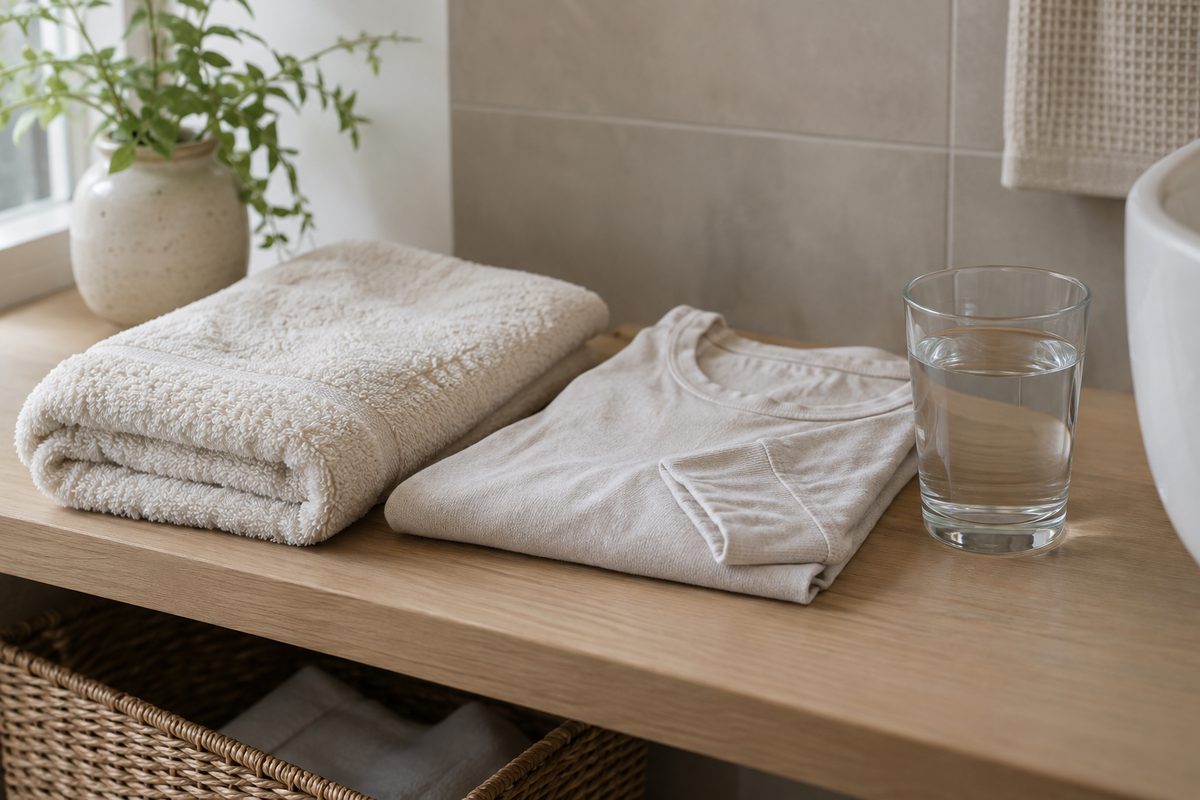
In TCM theory, after acupuncture or cupping the body's pores are in an open state and it is easy for wind and cold to get in [KWH]. So the practices the theory attaches are keeping warm and staying out of draughts. Kiang Wu Hospital's Chinese medicine department lists these points [KWH]:
- ① Avoid direct wind and air-conditioning draughts, keep time in cold environments short, and adjust clothing to the weather [KWH].
- ② Keep the skin clean and dry to avoid infection [KWH]; if the skin is broken after the cups come off, cover it with a sterile dressing [NATCM-2017].
- ③ Rest: avoid overexertion and strenuous exercise [KWH].
- ④ Eat light: avoid spicy, oily and cold or raw foods, and drink adequate water [KWH]. The Taiwan folk-practice manual: no cold or raw food straight after cupping [MOHW-TW]; Puli Christian Hospital: drink a cup of warm water, and never iced water [PCH-2022].
- ⑤ Do not scratch [KWH].
Showering. The Taiwan folk-practice manual's wording: no bathing within 30 minutes [MOHW-TW]. The manual gives no reason.
Among the pages this article cites, the nearest explanation is Kiang Wu Hospital's line: after cupping the pores are in an open state and it is easy for wind and cold to get in [KWH] — but that sentence is about draughts and cold environments, not bathing.
So "no cold shower" is a general practice extended from the theory's concern (catching cold): warm water that day, no cold showers, no cold-water soaking; dry off and keep warm afterwards.
This is practice, not a promise of a result; if your practitioner gives you a different timing, follow theirs.
Before cupping, the advice runs the other way: shower beforehand and keep the skin clean [NATCM-2017].
How often. The Taiwan folk-practice manual: cupping the same area again is best spaced at least 3 days apart, and depends on the skin colour and the person's condition [MOHW-TW]. Whether there is a second session and how far apart — that is the decision of the practitioner who has seen you. Follow their written instructions.
💡 Remember: aftercare is three things — keep warm and out of draughts [KWH], skin clean and dry [KWH], no shower for 30 minutes [MOHW-TW].
Fitting it into Malaysian life
- The air-conditioned office: going straight back to sit under the vent is what Kiang Wu Hospital's "avoid direct air-conditioning draughts" looks like day to day in Malaysia [KWH]. Put on a jacket, or turn the vent away.
- Riding home on a motorbike: wind straight onto a freshly cupped back. Bring a jacket, or take a Grab that day.
- Kopi peng, teh ais: no cold or raw food straight after cupping [MOHW-TW]; make it warm that day and go back to iced the next.
- Pool, beach, cold shower: skip them that day — this is the Malaysian version of "no cold-water soaking". No shower within 30 minutes is the Taiwan folk-practice manual's number [MOHW-TW]; the rest is usual practice.
- The pharmacy (Guardian, Watsons): sterile gauze is what Puli Christian Hospital recommends for covering a blister [PCH-2022]; a large blister is covered with a sterile dressing [MOHW-TW]. The pharmacy stocks both.
- Cupping during confinement: tell the practitioner at the start that you are postnatal or breastfeeding (section V).
- Klinik Kesihatan or a clinic: for the non-emergency situations in section V — a large blister, bruising that does not fade, signs of infection — the nearest government clinic is the door to knock on; fever, dizziness or difficulty breathing is still 999.
- Home cupping sets from online shops or direct sellers: this article is about cupping performed by a TCM practitioner. The retention times and cautions above are not written for self-use.
Common questions
How long do the cups stay on? The Taiwan Ministry of Health and Welfare's operating manual for the non-medical cupping trade (suction cups): generally no more than 10 minutes, shorter for delicate skin, older people and children [MOHW-TW]. Puli Christian Hospital: about 5–10 minutes; too long may raise blisters [PCH-2022]. Cleveland Clinic: several minutes [CC-2023]. Your practitioner may shorten it depending on your situation — follow what they tell you.
How long do the marks take to fade? The mark is left by capillaries under the skin that the negative pressure ruptured and that bled [KWH] (section IV). Kiang Wu Hospital's Chinese medicine department: gradually within a few days to a week [KWH]. Cleveland Clinic: a week or two [CC-2023]. NHS Tayside: several days or weeks [NHS-TAY]. If the marks are very large or last a long time, see a doctor [KWH].
Can I shower straight after cupping? The Taiwan folk-practice manual's number is: no bathing within 30 minutes [MOHW-TW]. The manual gives no reason for the 30 minutes (section VI). The usual practice is warm water that day, no cold showers, no cold-water soaking; dry off and keep warm. If your practitioner gives you a different timing, follow theirs.
Can I sit in air-conditioning after cupping? Kiang Wu Hospital's advice is to avoid direct wind and air-conditioning draughts, keep time in cold environments short, and keep warm [KWH]. In Malaysian terms: do not sit directly under the vent, put on a jacket, or turn the vent away.
Will the marks scar? The marks themselves fade on their own [CMRO]; Cleveland Clinic says they are not true bruises that injure muscle fibres [CC-2023]. Scarring is on Cleveland Clinic's list of risks, alongside skin infection and burns [CC-2023] — so do not burst blisters, cover burns and broken skin and contact your practitioner; the mark itself needs no treatment.
Does cupping hurt? Cleveland Clinic: it should not cause pain, though you may feel some skin tightness during the procedure; afterwards you may feel bruised and slightly sore, but you should not have severe discomfort [CC-2023]. Kiang Wu Hospital: mild pain generally eases within a few hours to a day [KWH]. If there is local pain during the session, the usual handling is to release some suction or remove the cup at once [MOHW-TW] — say so on the spot. For what a first acupuncture session feels like, see Does Acupuncture Hurt the First Time (/does-acupuncture-hurt-first-time/).
In closing
✅ Remember these:
- Cupping is a TCM external therapy in which negative pressure draws the skin up [CMRO]; of the four methods, the one that breaks the skin is wet cupping [CMRO][CC-2023].
- The cups stay on for generally no more than 10 minutes [MOHW-TW], three to five cups on average [CC-2023], and it should not hurt [CC-2023].
- The dividing line between cup retention, sliding cupping and wet cupping is whether the skin is broken; of the three, the one that leaves blood in the cup is wet cupping [WHO-2022], which is why the rules for needles and cups are stricter [NATCM-2017].
- The marks are the trace of capillaries under the skin broken open and bleeding [KWH][CC-2023], and fade within days to two weeks [KWH][CC-2023]; their depth is not a gauge of how well or unwell you are.
- Blood thinners, pregnancy, broken skin, children, older adults, fever, and the other situations listed in section V — say so at the start.
- Afterwards: keep warm and out of draughts [KWH], skin clean and dry [KWH], no shower for 30 minutes [MOHW-TW], no iced water [PCH-2022].
❌ Do not do these:
- Do not burst a blister yourself [PCH-2022].
- Do not stop medication your doctor prescribed because you have started cupping.
- Do not treat cupping as a weight-loss method — weight management is a matter of diet, exercise and overall habits.
👉 If you are unsure whether cupping is suitable for your situation, you are welcome to book an online consultation with HansMed, where a practitioner registered under the T&CM Act 2016 can assess it with you. Cupping is an in-person procedure; the in-person service is coming soon.
Reviewed by Mr. Lim Gao Hong, a TCM practitioner registered with Malaysia's Traditional and Complementary Medicine Council under the T&CM Act 2016, practising in general TCM, pain management and internal medicine.
Sit with a licensed TCM practitioner from wherever you are.
HansMed Modern TCM
For general wellness education only — not medical advice. Consult a registered TCM practitioner for personal guidance.


