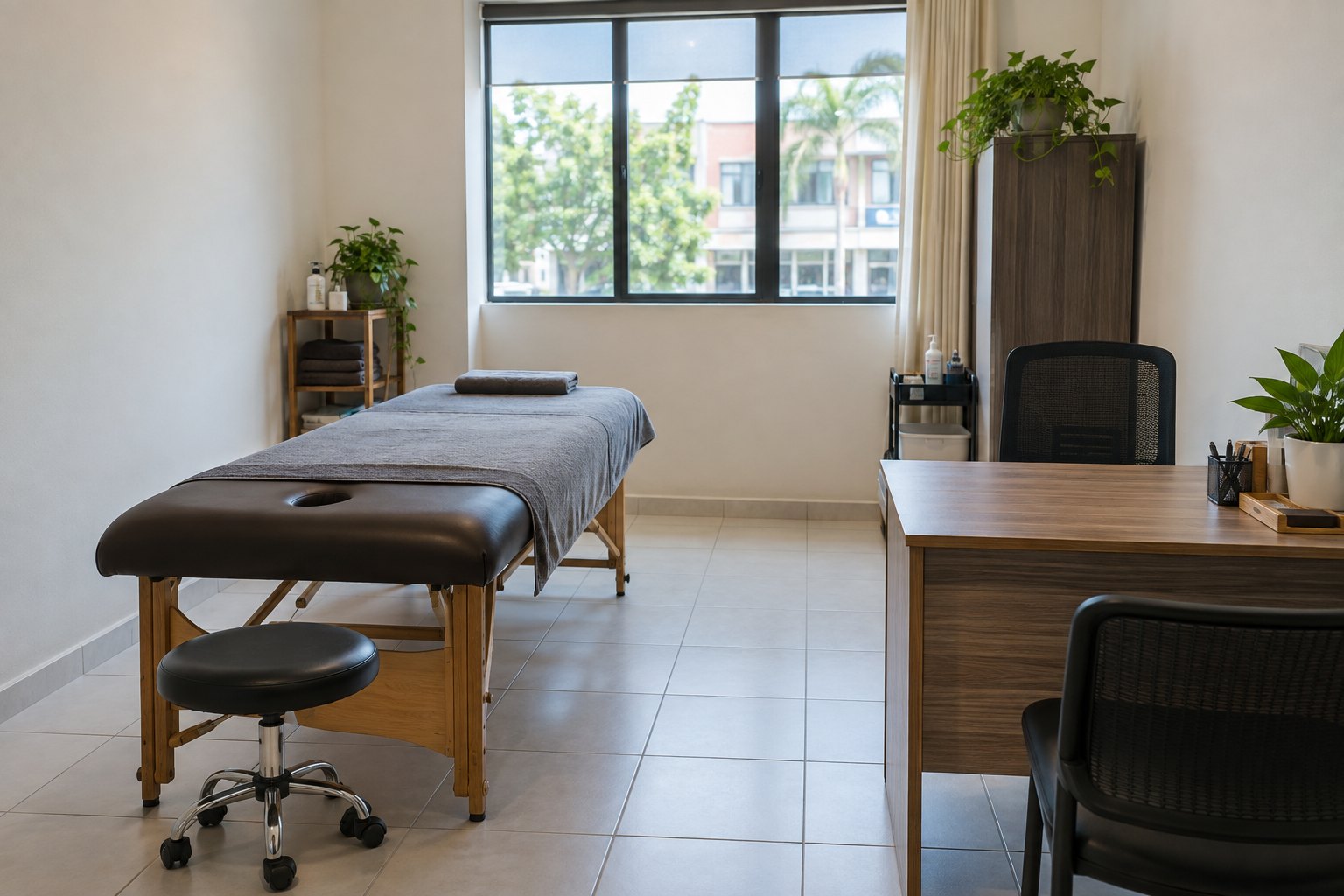
"I had a foot massage at the mall over the weekend — is that the same thing as the tui na you talk about?" This is a question that comes up often. In Malaysia, massage is part of ordinary life — foot reflexology in the mall, blind masseur centres, spas, traditional Malay urut. There is no shortage of choice.
Because there is so much choice, many people are unsure which is relaxation and which is treatment. This article sets out 5 things to know, in plain language, so you can see the difference before you decide.
I. First, the basics: tui na is one of TCM's external therapies
Tui na is TCM manual therapy, carried out by a practitioner using hand techniques on specific areas of the body. The operation itself is physical — pressing, kneading, pushing and grasping applied to the body surface. That part is visible and straightforward.
Why those particular areas are chosen, and what the technique means within TCM, belongs to the theoretical framework of meridians and qi. That is a different kind of explanation from modern physiology, and the two should not be conflated.
- It is part of clinical practice. In a TCM clinic, tui na is performed by a practitioner registered under the T&CM Act 2016 and is regulated under that Act.
- It does not stand alone. The practitioner consults and assesses first, then judges whether manual therapy suits your current situation.
💡 Remember: the point of tui na is not how much pressure is applied. It is who assesses you, and what they assess.
II. So what about spas, foot reflexology and urut?
These are services whose main purpose is relaxation and comfort. They have a long history in Malaysia and are how a great many people unwind after a week of work. They have their own industry standards and their own skill — a good practitioner in that field trains for years too.
What is worth explaining is the difference, not a ranking:
- Different purpose — one is oriented toward relaxation, the other toward a practitioner's clinical judgement.
- Different process — a relaxation service generally follows the treatment the customer selects; TCM tui na has a consultation step before it.
- Different regulation — TCM tui na falls within registered practice under the T&CM Act.
💡 Remember: this is not a question of which is better. It is a question of which one you need right now.
III. The difference at a glance
| TCM tui na | Relaxation massage (spa, foot reflexology, urut) | |
|---|---|---|
| Who performs it | A TCM practitioner registered under the T&CM Act 2016 | A massage therapist or practitioner in that industry |
| What happens first | Consultation and assessment, to judge suitability | Generally follows the treatment the customer selects |
| What the technique follows | Areas and meridians within TCM theory | Comfort and relaxation |
| What it is | Part of clinical practice, regulated under the T&CM Act | Generally a leisure or beauty service |
| When to have it | When a practitioner has assessed and decided | When you would like to relax |
This table deliberately does not say "how often". That varies from person to person and should be explained by the practitioner who assesses you.
IV. Situations that need extra care
Not every physical condition is suited to manual therapy. Whether you choose tui na or a relaxation massage, tell the person before you begin if any of the following apply:
- A fracture, a recent injury, or a recent impact — see a doctor for assessment first, rather than going for manual treatment.
- Osteoporosis, or previous bone surgery — bone tolerance is not the same as most people's, so be sure to say so beforehand.
- Blood-thinning medication, or a bleeding tendency — let both your doctor and your TCM practitioner know.
- Broken skin, eczema or infection — the affected area is not suitable for manual technique.
- Pregnancy, confinement, or breastfeeding — these are particular states, so consult a qualified TCM practitioner first.
- A history of heart disease or cancer — follow your doctor's diagnosis and treatment, and tell your treating doctor before deciding on any complementary approach.
- Pain that is not improving, or that comes with numbness, weakness or fever — see a doctor for tests rather than relying on manual therapy alone.
⚠️ A safety note: TCM and Western medicine complement each other; it is not a choice between them. If you have a chronic condition or take long-term medication, make sure both sides know your full medication list, and never stop or adjust a prescription on your own. If you experience confusion, severe pain or difficulty breathing, call 999 or go to the nearest emergency department immediately.
A note: this section is general information only. For conditions like these, follow your doctor's diagnosis and treatment, and seek medical attention when you need it.
V. In Malaysian life: three questions to ask yourself first
Long hours at a desk, long rides on a motorbike, a weekend of carrying a small child — all ordinary here. Before you look for someone to "loosen things up", ask yourself three questions:
- Do I want to relax, or do I want a specific physical situation looked at? For unwinding, that hour at the mall is well suited. For something specific, having a practitioner assess it first is the sounder route.
- Who is performing it? If a service is offered under the name of TCM tui na, you are entitled to confirm whether the person is a registered TCM practitioner. How to check: how to verify a TCM practitioner's registration.
- Have I explained my health situation properly? Elders often say a good pull will sort it out — but someone who does not know what medication you take or what surgery you have had has no basis on which to judge.
If you are not sure which situation you are in, an online consultation is a reasonable first step: set out what is going on, then decide. To see how one works: what to prepare before an online consultation.
In closing
✅ Worth remembering:
- Tui na is a TCM external therapy, performed by a registered practitioner and regulated under the T&CM Act.
- Spas, foot reflexology and urut have relaxation as their main purpose — a different kind of service, not a lesser one.
- TCM tui na has a consultation and assessment step before it. That is the key difference.
- Fractures, osteoporosis, bleeding tendency, pregnancy or a chronic condition — say so before you begin.
- Pain that is not improving, or that comes with numbness, weakness or fever — see a doctor for tests.
❌ Better not to:
- Go for manual treatment before medical assessment when there is an acute injury or unexplained pain.
- Stop prescribed medication on your own because you are having manual therapy.
- Assume someone is a registered TCM practitioner because their technique feels skilled — you can check.
👉 If you are unsure whether manual therapy suits your situation, you are welcome to book an online consultation with HansMed, where a practitioner registered under the T&CM Act 2016 can assess it with you. HansMed currently offers online consultations; in-person consultations are coming soon.
Sit with a licensed TCM practitioner from wherever you are.
HansMed Modern TCM
For general wellness education only — not medical advice. Consult a registered TCM practitioner for personal guidance.


